
Best Jewellery for Conch Piercings That Fits
A conch piercing sits in one of the most visible parts of a curated ear, yet it has to work harder than most. It needs enough room to heal comfortably, jewellery that will not catch in your hair, and a design that looks intentional from every angle. The best jewellery for conch piercings depends on whether yours is fresh, fully healed, pierced in the inner conch or outer conch, and whether you want understated everyday shine or a statement hoop.
The first rule is simple: choose for your piercing before choosing for the trend. A beautifully detailed piece is only a good choice when its gauge, length and shape suit your anatomy. That is where professionally informed jewellery makes all the difference.
Start with a flat-back stud for a fresh conch
A fresh conch piercing is usually fitted with a straight bar, most often a labret-style stud with a flat disc at the back. This gives the piercing space for initial swelling while keeping the front neat and secure. The flat back is particularly practical because it rests more comfortably against the head when you sleep than a traditional butterfly fastening.
For healing, your piercer's advice should always lead. The jewellery fitted at your appointment is selected for your individual ear and expected swelling, so do not change it early simply because you are ready for a new look. Cartilage can take considerably longer to settle than a lobe piercing, and changing jewellery before it is ready can cause irritation, bumps or delayed healing.
Once you have been given the all-clear, a well-made flat-back stud remains one of the most comfortable choices for daily wear. A tiny crystal, smooth ball, bezel-set stone, celestial shape or polished disc gives you colour and character without adding unnecessary bulk. It is also an excellent starting point if you are building a layered ear with helix, lobe or tragus jewellery.
Best jewellery for conch piercings once healed
A healed conch gives you far more styling options. Flat-back studs are still brilliantly wearable, but hoops, clicker rings and decorative statement pieces can transform the whole centre of the ear.
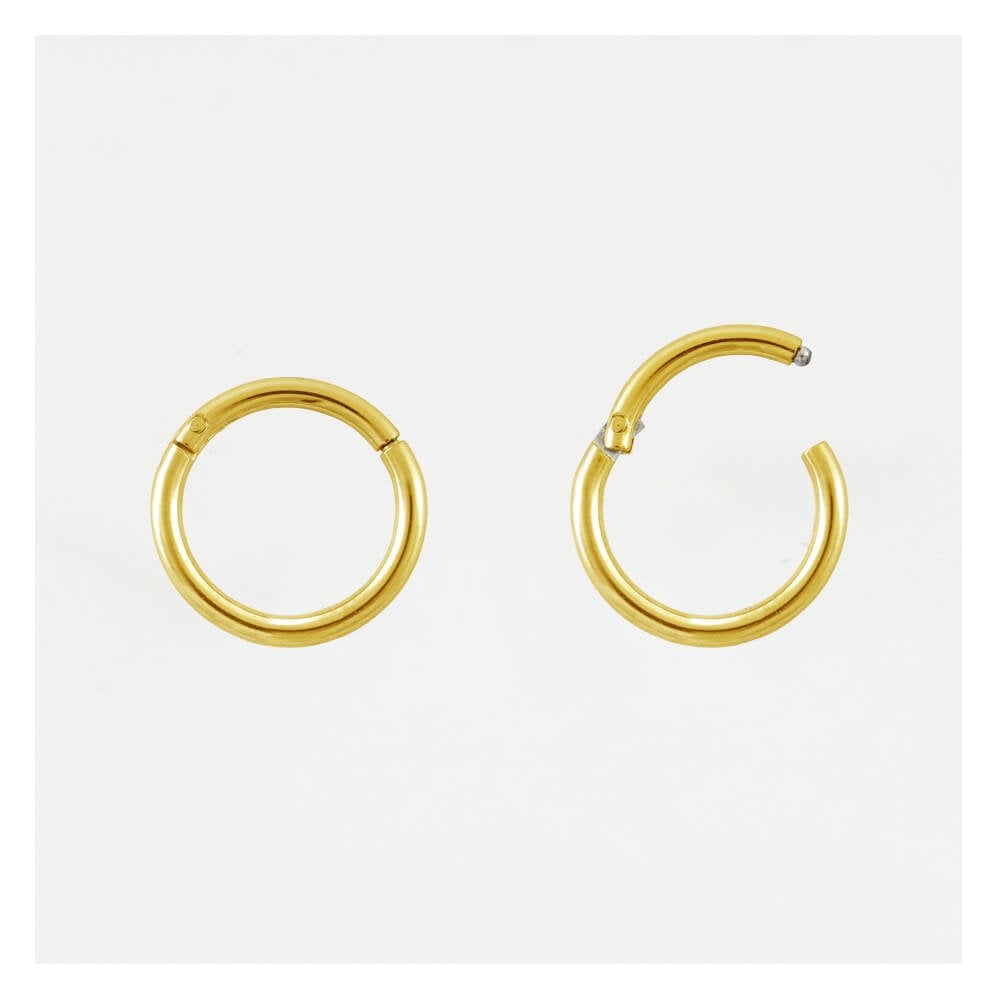
The right choice comes down to the effect you want. A small gem or polished gold stud creates a refined, low-effort finish. An oval, heart-shaped or textured clicker makes the conch a focal point. A smooth hoop is the classic option for anyone who likes their jewellery clean, modern and easy to coordinate with other pieces.
Do not assume a hoop is automatically the best choice just because it is popular. A ring moves more than a stud, can catch on hair and headphones, and may feel less forgiving if the piercing is still at all tender. If your conch is completely settled and you want a bolder silhouette, it is a fantastic choice. If comfort is the priority, a flat-back stud often wins.
The hoop fit matters more than the design
Conch hoops need a larger diameter than many people expect. Unlike a helix ring, the jewellery has to travel around the outer edge of the ear while passing through the central cartilage. If the diameter is too small, the hoop will press tightly into the ear, feel uncomfortable and make the piercing look strained.
There is no one-size answer because ear anatomy varies. Measure the distance from your piercing hole to the outer edge of your ear, then allow enough extra room for the ring to sit without tension. Your existing fitted jewellery or a piercer's measurement is the most reliable guide.
As a general styling reference, these are common starting points for healed conch hoops:
- 10 mm can suit a compact ear or a piercing placed closer to the rim.
- 12 mm is a popular everyday diameter for many inner conch placements.
- 14 mm gives a looser, more noticeable hoop effect.
- 16 mm and above can create an oversized statement, especially with chunky or decorative designs.
Choose a gauge that suits your existing piercing
Gauge refers to the thickness of the post or ring. Many conch piercings are performed at 1.2 mm, while some may be pierced at 1.6 mm. Never force a thicker gauge through a piercing, and avoid downsizing to a much thinner piece without professional guidance if you want to maintain the piercing's size and stability.
If you are replacing jewellery you already wear comfortably, matching its gauge is the safest approach. If you are unsure, ask your piercer or measure the jewellery you were fitted with. The same applies to labret post length: a snug healed fit should not pinch, sink into the skin or leave excessive bar showing.
Which metal is right for your conch?
Material is not just a finishing touch. Cartilage can be fussy, particularly if you have sensitive skin or a history of irritation from lower-quality fashion jewellery.
For a healing piercing, use the material and style recommended by your professional piercer. Implant-grade titanium is widely favoured for fresh piercings because it is lightweight and suitable for many people with sensitivities. Quality solid gold can also be appropriate when specified by an experienced piercer, but plated pieces and unknown metal mixes are not the place to compromise while healing.
For fully healed conches, sterling silver and 18k gold designs offer beautiful options for dressing your ear. Sterling silver has a cool, polished finish that works especially well with crystal details, Gothic-inspired motifs and darker styling. Gold brings warmth and makes a conch look instantly elevated, whether you prefer a minimal bead, a sparkling stone or a sculptural clicker.
The trade-off is that silver is best reserved for a settled piercing and should be cared for properly. If you notice irritation, discolouration or discomfort, take the piece out and switch back to jewellery that you know agrees with your skin. Solid precious metals are an investment, but they earn their place in jewellery you plan to wear often.
Match your conch jewellery to your ear stack
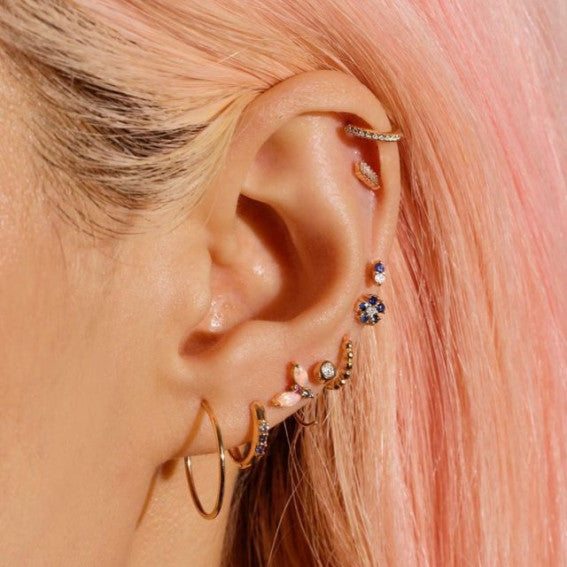
The conch sits at the centre of the ear, so it has a natural ability to pull a whole stack together. If you wear tiny lobe hoops and a delicate helix stud, try a fine conch ring in the same metal tone. For an all-gold look, a polished 18k gold-style conch stud can echo your lobe jewellery without making the ear feel overdone.
If your style is more expressive, let the conch carry the personality. A star, snake, cross, pet-inspired motif or coloured stone can become the defining detail in a curated ear. Keep the surrounding piercings simpler so the look feels styled rather than crowded.
Mixing metals can work too. Silver and gold look deliberate when there is a connecting detail, such as clear stones, pearl accents or repeated shapes. The goal is not to make every piece match exactly. It is to make the ear look considered.
Comfort details worth checking before you buy
A conch piercing is exposed to more everyday friction than you might think. Over-ear headphones, telephone calls, hairbrushes, towels and sleeping on that side can all make poorly fitted jewellery annoying. Look for smooth edges, secure closures and a profile that suits your routine.
Clicker hoops are loved for their easy hinged closure and clean finish, but check that the hinge will not sit inside the piercing channel. Seam rings offer a minimal look, though they can be trickier to fit correctly. Threadless and internally threaded flat-back studs are practical choices where available, as the wearable post stays smooth.
If you sleep on your side, a low-profile flat-back stud is usually kinder than a large hoop. If you regularly wear headphones, choose a slim front design that does not press against the earcup. Small decisions like these are what turn a lovely piece into jewellery you actually enjoy wearing every day.
London Loves Body Jewellery curates pieces with both placement and personal style in mind, so you can choose something that feels fashion-led without losing sight of fit and comfort.
Your conch does not need the biggest hoop or the brightest stone to stand out. Choose a piece that sits beautifully, feels good through a normal day and makes you want to catch your reflection just once more before heading out.