
Can Sterling Silver Go in Piercings? What to Know
That silver hoop may be exactly what your curated ear needs, but the timing matters as much as the design. Can sterling silver go in piercings? Yes, for many fully healed piercings, but it is not the right choice for a fresh or still-healing piercing. The difference can mean a comfortable, polished look or a piercing that becomes sore, discoloured and difficult to settle.
Sterling silver has a place in elevated body jewellery, particularly when you want detailed charms, sculptural shapes and a softer tone than yellow gold. The key is choosing it for the right placement, at the right stage of healing, and treating it with the care a precious metal deserves.
Can sterling silver go in piercings safely?
Sterling silver can be worn in healed piercings, especially ear lobes, when the jewellery is good quality and your skin tolerates it well. Sterling silver is usually made from 92.5% pure silver, with the remaining metal commonly copper. That alloy makes silver durable enough to create wearable jewellery, but it also means it behaves differently from implant-grade titanium or solid gold.
A healed piercing has formed a stable channel of skin, so it is generally better able to cope with everyday jewellery changes and different metal alloys. Even then, suitability is personal. Some people wear sterling silver all day without a problem; others find that moisture, sweat or sensitivity causes irritation over time.
For fresh piercings, the answer is no. New piercings need jewellery designed for initial healing, usually implant-grade titanium fitted by a professional piercer. Titanium is lightweight, highly biocompatible and does not tarnish. It gives your piercing the calm, consistent environment it needs while swelling reduces and the tissue repairs.
Why sterling silver is not for new piercings
Silver naturally tarnishes when it reacts with air, moisture, skincare and sulphur compounds. Tarnish is not a sign that your jewellery is poor quality, but it can leave a dark residue and make silver unsuitable for a healing wound. A new piercing is not simply a hole in the skin. It is delicate healing tissue that can be easily irritated by friction, bacteria, residue or an unsuitable metal.
Sterling silver’s copper content can also be a consideration. Copper is useful in the alloy, but some wearers are sensitive to it. If you have reacted to costume jewellery before, or notice itching, redness or soreness when wearing silver, it is best to choose titanium or solid gold instead.
Plated silver is a separate issue. Silver-plated body jewellery has only a thin surface layer of silver over a base metal. Once that layer wears, the underlying metal may come into contact with your skin. For jewellery that sits in a piercing, particularly a piece you plan to wear often, solid sterling silver is the more dependable option.
Which healed piercings suit sterling silver best?
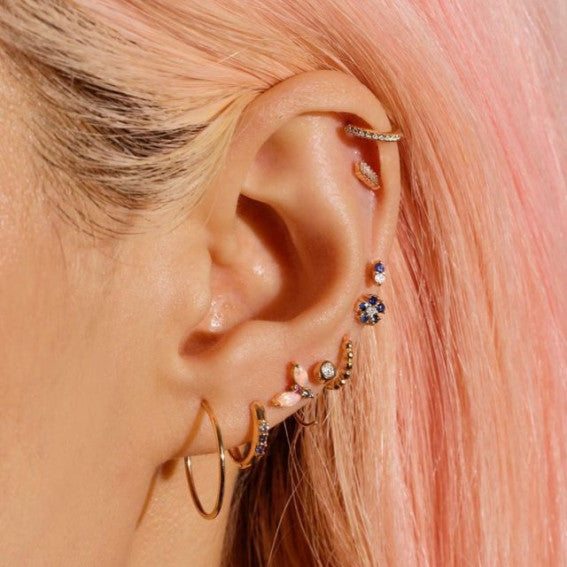
Healed lobe piercings are often the easiest place to wear sterling silver. They tend to be less temperamental than cartilage placements and give you plenty of styling freedom, from tiny studs and huggies to statement drops. Silver is also a lovely choice for an occasional second or third lobe piece when you are building a mixed-metal ear stack.
A fully healed helix, conch or tragus piercing may also be able to wear sterling silver, but these placements need more thought. Cartilage piercings can take much longer to heal than lobes and may still feel settled long before they are genuinely ready for frequent jewellery changes. If the piercing feels tender, produces discharge, develops a bump or becomes irritated after sleeping on it, keep your healing jewellery in place and speak to a professional piercer.
Nostril piercings vary too. A long-healed nostril may tolerate a sterling silver stud or hoop beautifully, particularly for short-term wear. However, the inside of the nose is warm and moist, which can speed up tarnishing. If you want a piece to live in day and night, titanium or solid gold is often the lower-maintenance choice.
For belly bars, nipple jewellery and intimate piercings, we would usually favour implant-grade titanium or solid gold for regular wear. These areas deal with movement, pressure and moisture, and jewellery needs to be especially reliable. Sterling silver can be better reserved for decorative, occasional styling in a proven, fully healed piercing, rather than your everyday staple.
How to wear sterling silver body jewellery comfortably
Start with a piercing that is genuinely healed, not simply old. Healing times are individual, and a piercing that looks fine on the outside can still be fragile within. If you are unsure, an experienced piercer can assess it before you make a jewellery switch.
Choose a design made specifically for body jewellery rather than adapting a standard earring. The post thickness, closure and finish all affect comfort. A beautifully detailed hoop is only a good choice if it closes securely, does not pinch and is the correct gauge for your piercing. For cartilage and nostril placements in particular, fit matters just as much as metal.
Keep silver away from perfume, hairspray, fake tan, body lotion and cleaning products where possible. Put your jewellery on after your skincare and fragrance routine, then remove it before swimming, showering or exercising heavily if you can. Chlorine, salt water and sweat can dull silver quickly and may leave the piercing feeling less comfortable.
After wearing it, wipe the jewellery gently with a soft, dry cloth. Store it clean and dry, ideally in a separate pouch or compartment so pieces do not scratch each other. If tarnish appears, use a silver polishing cloth on the jewellery once it has been removed. Avoid harsh dips or chemical cleaners, especially around stones, enamel or oxidised details.
Signs silver is not agreeing with your piercing
A little tarnish on the jewellery is normal. A reaction in your skin is not something to ignore. Take the piece out and return to a known, body-safe material if you notice persistent redness, itching, swelling, warmth, soreness, weeping or a dark mark around the piercing that does not wash away easily.
Do not try to push through irritation for the sake of a look. Leaving unsuitable jewellery in place can make a previously settled piercing angry and extend the time it takes to calm down. If there is significant pain, swelling or signs of infection, seek advice from a reputable piercer or healthcare professional.
It is also worth separating a metal reaction from a fit issue. A hoop that is too tight, a post that is too short or a charm that catches on clothing can create irritation whatever the material. Changing to a better-fitting piece may solve the problem, but if you have any doubt, titanium is the sensible reset.
Sterling silver versus titanium and gold
Sterling silver wins on character. It has a bright, cool finish and works brilliantly with celestial details, gothic motifs, hearts, charms and textured designs. It is an excellent way to bring a more jewellery-led feel to healed lobe piercings without losing that premium look.
Titanium wins for healing and fuss-free everyday wear. It is the professional choice for new piercings and often the best option for sensitive skin, active lifestyles and cartilage that has a history of being difficult.
Solid gold offers a luxurious middle ground for long-term wear, provided it is a suitable quality and free from problematic alloys. It does not tarnish like silver, although it still needs thoughtful care and the right fit. For a signature piece you never want to take out, solid gold or titanium is usually the stronger investment.
At London Loves Body Jewellery, our view is simple: let your piercing’s condition lead the choice, then have fun with the styling. Save sterling silver for healed placements where its shine and detail can do what they do best. Your favourite silver piece should make your ear stack feel finished, not give you a reason to worry about it.