
How to Build Ear Stacks That Actually Work
A great ear stack usually falls apart in one of two places: the jewellery looks good on a tray but not on the ear, or it looks impressive for an hour and then becomes irritating to wear. If you’re wondering how to build ear stacks that feel polished, wearable and genuinely personal, the answer is less about cramming in more pieces and more about choosing the right balance of placement, scale and metal.
The best stacks look effortless, but they are rarely random. They work because each piece has a job to do. One piercing leads, another softens the look, another adds sparkle or shape. When you approach it that way, building an ear stack becomes much easier and far less expensive than buying pieces that never quite work together.
How to build ear stacks from the piercings you already have
Start with the piercings you actually wear most often, not the fantasy ear in your saved photos. A stack should suit your anatomy, your healed piercings and your day-to-day style. If you have first and second lobes plus a helix, that is already enough to create a layered look. If you have a conch, tragus or third lobe, you have even more room to play with shape and proportion.
The smartest first step is to map your ear visually. Look at where your piercings sit close together and where there is natural space. Closely placed lobe piercings often look best with a clear size progression, while cartilage placements can carry a slightly bolder statement piece without making the whole ear feel crowded.
This is where a lot of people overbuy. They pick several standout pieces when what the ear really needs is one focal point and supporting jewellery around it. If every stud is trying to be the star, the stack loses shape.
Choose your anchor piece first
Every strong ear stack has an anchor. That might be a statement hoop in the first lobe, a sparkling conch piece, a sculptural helix stud or a bold huggie that sets the tone for the rest of the ear. Once that piece is chosen, the rest should complement it rather than compete with it.
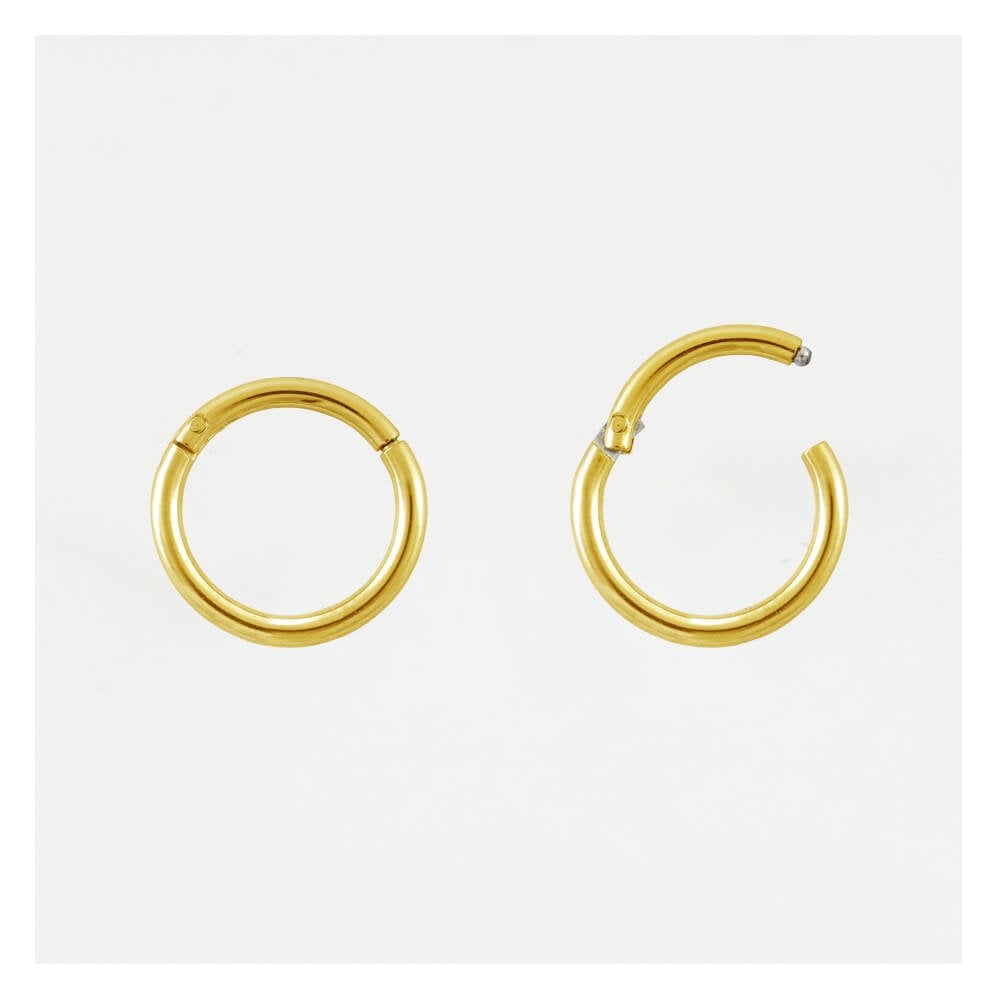
If your style leans classic, an anchor in sterling silver or 18k gold with a clean silhouette gives you plenty of flexibility. If you prefer something moodier or more directional, the anchor could be a gothic-inspired piece, a celestial shape or a crystal design that introduces more personality. The key is consistency. Mixing themes can work, but only if there is something tying them together, such as metal colour, stone tone or overall scale.
An anchor also helps you shop more efficiently. Instead of buying five pieces because they are individually pretty, you can ask whether each new addition supports the main look.
Think in size, not just style
When people learn how to build ear stacks well, this is usually the point that changes everything. Size matters just as much as design.
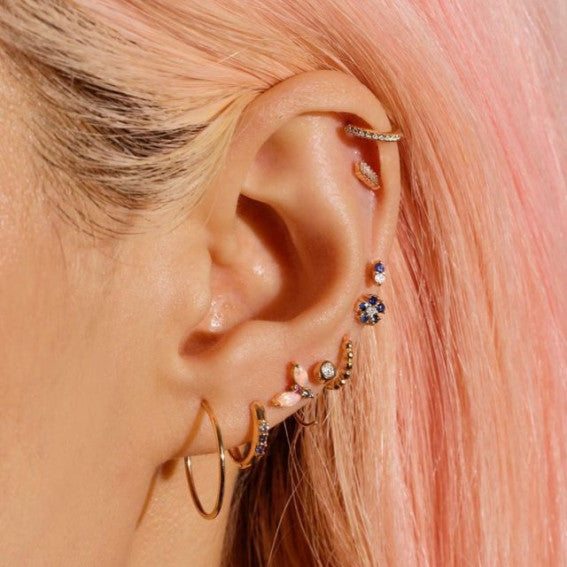
A stack generally looks better when there is some kind of visual rhythm. In the lobes, that might mean the largest piece in the first lobe, then a slightly smaller stud or huggie in the second, followed by a tiny accent in the third. In cartilage, it may mean a neat helix stud paired with a slightly more noticeable conch piece. The eye likes progression.
That does not mean everything has to shrink neatly from bottom to top. Sometimes a larger conch ring or statement flat stud creates exactly the right contrast. But if you are unsure, start with a tapering effect. It is the easiest way to create a stack that feels intentional.
It also helps to consider thickness and silhouette. A smooth polished huggie reads differently from a cluster stud, even if they are similar in size. Too many bulky shapes close together can make the ear feel heavy. Mixing one or two fuller designs with finer pieces keeps things lighter.
Pick a metal tone and stay consistent
One of the simplest ways to make an ear stack look expensive is to keep the metal consistent. Silver with silver, gold with gold, or a deliberate mixed-metal look that repeats clearly across the ear.
If you wear body jewellery every day, material quality matters just as much as appearance. Better metals tend to feel more comfortable over time, particularly in healed piercings that still react to poor-quality jewellery. For a stack you want to wear regularly, sterling silver and gold designs are usually a more reliable choice than disposable fashion jewellery that can tarnish quickly or feel rough at the post.
Mixed metal can absolutely work, but it needs purpose. One silver hoop dropped into an otherwise gold ear can look accidental. Repeating silver in at least two placements usually makes the look feel styled rather than unfinished.
Balance sparkle, shape and plain pieces
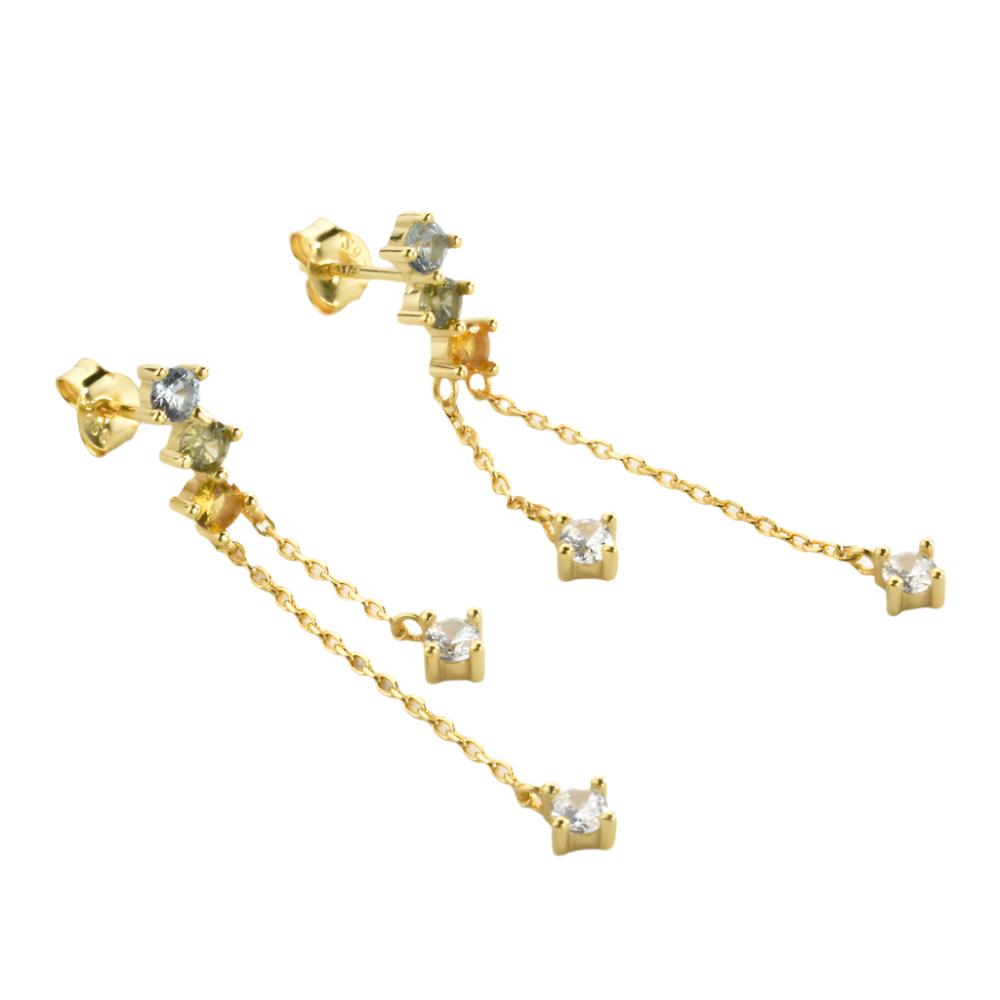
The easiest way to build depth is to mix finishes. If every piece is plain polished metal, the stack may look a little flat. If every piece is crystal-heavy, it can feel overdone for everyday wear. A good stack often combines all three elements: a little shine, a little shape and a little simplicity.
For example, you might have a stone-set huggie in the first lobe, a plain mini stud in the second, a motif stud in the third and a sleek helix piece to pull everything together. That mix gives the eye somewhere to rest.
This is also where personal style comes through. If you love a cleaner jewellery look, your version of contrast might be achieved through different shapes rather than stones. If you prefer more drama, the balance might come from mixing pavé with smooth gold and one more directional feature piece.
Match the stack to how you actually dress
An ear stack should feel like part of your wardrobe, not a separate project. If you mostly wear simple outfits, relaxed tailoring or knitwear, a refined stack with clean lines may suit you better than something heavily themed. If your style is bolder, layered and expressive, this is where you can lean into statement hoops, playful motifs or more dramatic cartilage jewellery.
There is no rule saying your stack must stay the same every day. A lot of people build a core ear of comfortable everyday pieces, then swap in one or two extras depending on the look. That is often the most practical approach because it gives you consistency without making your jewellery feel repetitive.
London Loves Body Jewellery works well for this kind of styling because the pieces are curated by people who understand piercing placements properly, so you are not just buying by appearance alone. That makes it easier to build a stack that is both stylish and suitable.
Comfort is part of the styling
A stack that pinches, snags or feels too heavy will not become your favourite, no matter how good it looks in the mirror. Comfort should be part of every decision.
Heavier hoops may work beautifully in a first lobe but feel annoying higher up the ear. Some cartilage placements suit flatter, neater jewellery better than ornate designs with too much projection. If you sleep on one side, you may also want smoother pieces in that ear or reserve more decorative jewellery for placements that do not take as much pressure.
It also depends on how healed your piercings are. Fully healed piercings give you more freedom to experiment, while newer or temperamental ones benefit from simpler, high-quality pieces that do not interfere with comfort. If a stack only works when you are sitting perfectly still, it probably is not the right stack for everyday life.
How to build ear stacks without overcrowding
The biggest mistake is trying to fill every piercing at once. Space is useful. A little negative space helps the jewellery stand out and keeps the ear from looking chaotic.
If you have multiple piercings, you do not always need to wear them all. Sometimes leaving one hole empty creates a much cleaner result, especially if your other pieces are more detailed. This can be surprisingly effective with lobes, where a first and third lobe combination can look more modern than filling every position.
It is also worth stepping back and checking the ear from a normal distance, not just close-up. Jewellery that feels subtle in your hand can read much stronger once everything is on. If the stack starts to blur into one shiny block, remove one piece and reassess.
Build slowly and edit often
The most polished ear stacks are usually built over time. They evolve as you learn what proportions suit your ear, which metals you wear most and what pieces truly earn their place.
That slower approach is usually better value too. Instead of impulse-buying a batch of jewellery and hoping it works, you can add one or two considered pieces at a time. A strong first lobe hoop, then a second lobe stud, then something for the helix. Each addition should make the whole ear look better, not just fuller.
Editing matters just as much as adding. If a piece never sits right with the rest of your jewellery, move it to another piercing or save it for a different look. Not every beautiful piece belongs in the same stack.
An ear stack is at its best when it feels effortless on you - not copied, not crowded and not uncomfortable. Start with what you already have, choose quality over filler, and let the look build naturally around your style. The right stack should feel like getting dressed with one less thing to second-guess.