
How to Choose Lobe Jewellery That Feels Right
A lobe piercing may be the most familiar ear piercing, but choosing the right piece is not simply a case of picking the prettiest stud. Knowing how to choose lobe jewellery means balancing the look you love with the metal, fit and fastening that will feel comfortable from morning to night. Get those details right and even a small pair of earrings can make your whole curated ear look feel considered.
How to choose lobe jewellery for your piercing stage
Your first question should be whether the piercing is fresh, still healing or fully healed. This changes what jewellery is suitable more than any trend, colour or charm.
For a new lobe piercing, keep the jewellery fitted by your professional piercer in place for the recommended healing period. Lobes usually heal more quickly than cartilage, but they still need time and careful aftercare. Changing jewellery too soon can irritate the channel, introduce bacteria or cause swelling that makes a once-comfortable post feel tight. If your lobe is sore, red, weeping or swollen, seek advice from your piercer before changing anything.
Once the piercing is healed, your options open up considerably. This is when you can experiment with delicate huggies, statement hoops, gemstone studs, charm drops and coordinated stacks. If you have had the piercing for years but it feels tender whenever you wear earrings, treat that as a comfort and material issue rather than something to put up with. A lighter design, smoother backing or higher-quality metal can make a noticeable difference.
Build around placement, not just preference
Not every lobe piercing sits in the same place. A first lobe piercing often has more room for a slightly larger hoop or a statement stone, while a second or third lobe tends to suit smaller proportions that do not compete with the main piece. High lobe piercings can also sit close to cartilage, so check that a hoop has enough clearance and that its edge will not rub against neighbouring jewellery.
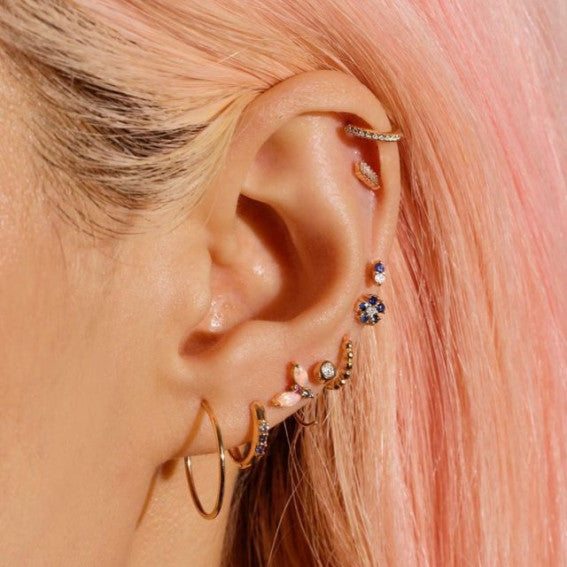
Look at your ear as a whole before adding to basket. If you wear a helix, conch or tragus piece, a simple lobe stud might give the ear some breathing space. If your lobe is the focus, a pair of polished gold hoops or a distinctive charm can lead the look. There is no fixed rule, but scale is what makes a curated ear feel intentional rather than crowded.
Start with a metal your skin will be happy to wear
Metal quality is one of the biggest differences between jewellery that looks good for an evening and jewellery you genuinely want to wear every day. Cheap plated fashion earrings can fade, tarnish or expose the base metal beneath the coating. For sensitive ears, that can mean itching, dryness or an uncomfortable burning feeling.
Solid gold and sterling silver are popular choices for healed lobe piercings because they offer a more elevated finish and, when properly cared for, lasting wear. 18k gold brings a rich, warm colour and is ideal when you want a premium piece that works for both everyday styling and special occasions. Sterling silver has a cooler, brighter tone and pairs beautifully with white stones, black details and Gothic-inspired designs.
There is a trade-off. Silver naturally tarnishes over time, particularly when exposed to moisture, perfume, hair products and lotions. That does not mean it is poor quality, but it does mean it benefits from occasional polishing and dry storage. Gold is lower maintenance, although delicate charms and fine chains still need careful handling.
For a fresh piercing or anyone with a known metal sensitivity, ask a professional piercer which material is appropriate. Sterling silver is best reserved for healed piercings, as it can tarnish and is not usually the first choice during healing. The same applies to any piece where the metal content is unclear. A beautiful design is only a good buy if it is suitable for your ear.
Get the measurements right before choosing a hoop or stud
The most common fit mistake is assuming that all lobe jewellery uses the same size. It does not. The gauge describes the thickness of the post or hoop, while length and diameter determine how the piece sits on your ear.
For studs, post length matters most. A post that is too short can pinch the lobe, especially if your lobes are fuller or prone to slight swelling. One that is too long may catch in hair, scarves and jumpers, or leave the decorative front sitting away from the skin. If you are replacing a comfortable piece, measure it where possible or use its listed specifications as your starting point.
For hoops, focus on the internal diameter rather than how large the hoop appears in a photograph. A snug huggie creates a neat, close-to-the-lobe finish, but it needs enough room to close without pressure. A larger diameter hangs lower and gives more movement, which works well for charm hoops and first-lobe styling. If you are between sizes, consider how you sleep, whether you wear headphones and whether the hoop needs to sit alongside another piercing.
Thickness affects the overall look too. Fine hoops can feel understated and elegant, while a wider hoop gives a more confident, fashion-led finish. Neither is automatically more comfortable. A slim hoop with a poorly placed hinge can irritate, while a thicker, smoothly finished hoop may be perfectly easy to wear.
Choose a fastening that suits your routine
Backings and closures are easy to overlook until one digs into your neck or disappears down the plughole. Butterfly backs are familiar and quick to use, but they can collect product build-up and may press into the skin if worn tightly for long periods.
Flat-back styles are a favourite for people who sleep in their jewellery or wear several piercings at once. Their smooth profile sits comfortably against the back of the lobe and is less likely to catch in hair. Push-fit and threaded options can be very secure, though the tiny components may take a little more patience to change.
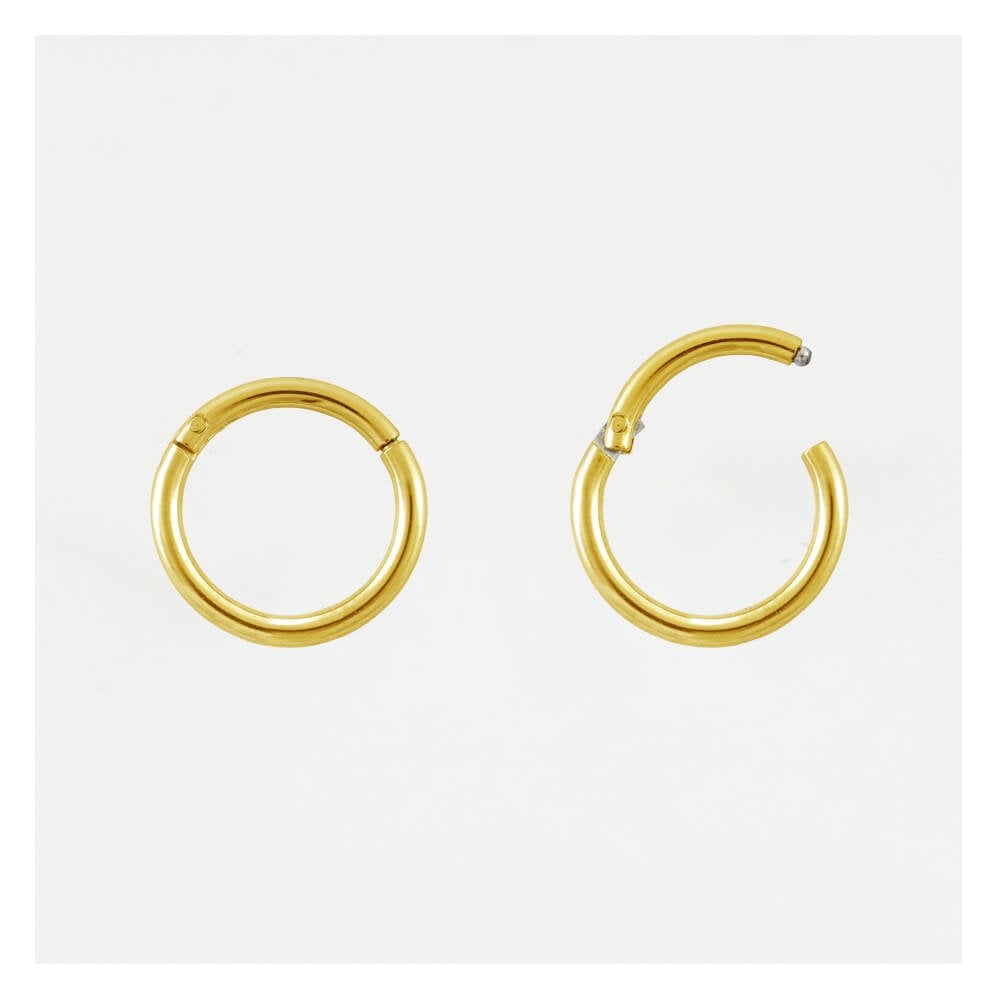
For hoops, clickers and hinged huggies offer simple, tidy closures. Check that the join sits flush when closed and that any decorative stones or charms face the direction you want. If you remove jewellery often for sport, work or swimming, prioritise a fastening you can manage confidently without forcing it.
Choose the style after you have chosen the fit
Once the practical details are sorted, styling becomes the enjoyable part. Start with the colours you already wear most. Yellow gold gives warmth to neutral outfits and works beautifully with earthy tones, rich reds and Western-inspired details. Sterling silver has a sharper, cooler feel that suits monochrome looks, crystal details and darker alternative styling. Mixing metals can look modern too, especially when one tone is repeated elsewhere in the ear to make the combination feel deliberate.
A classic stud is the most versatile foundation. It can sit quietly beneath a larger hoop, balance a busy cartilage piece or be worn as a matching pair for a polished everyday finish. Choose a tiny star, heart, crystal or animal detail if you like personality in the smaller spaces of your ear.
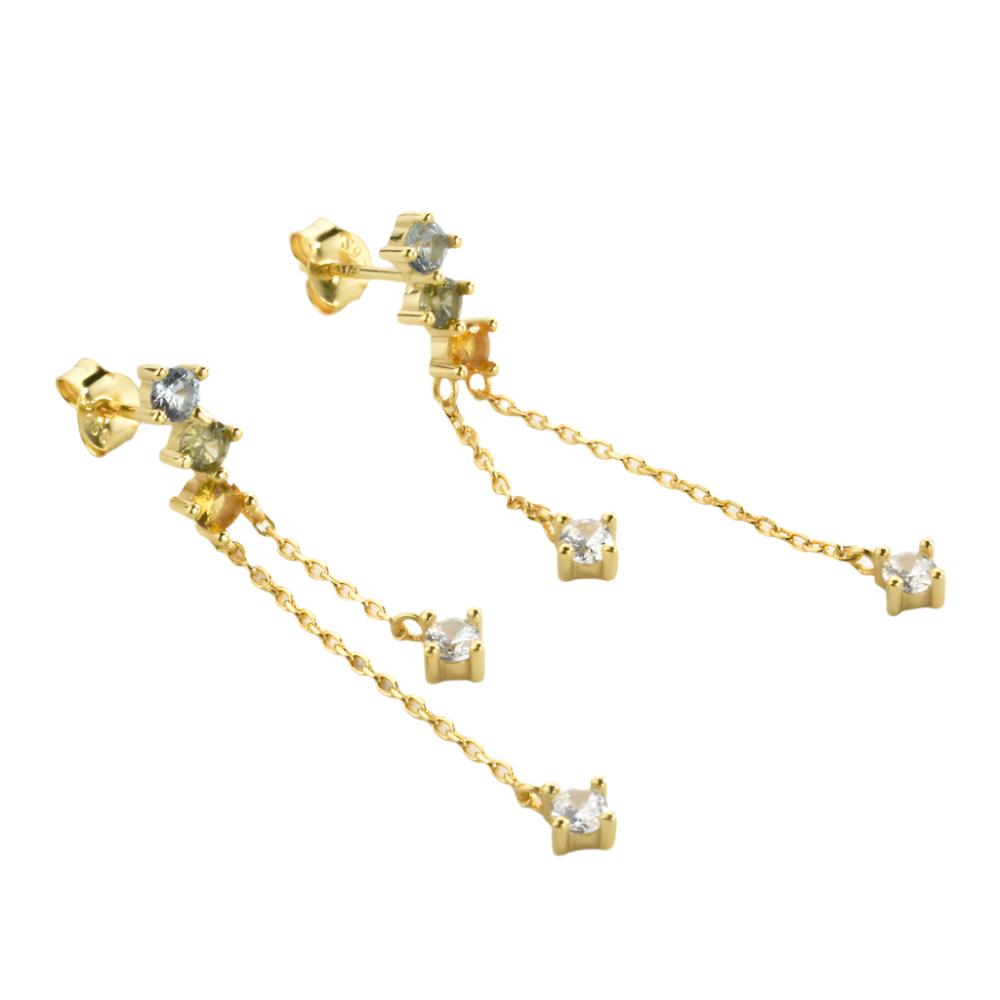
Hoops offer more visual impact without necessarily feeling formal. Smooth huggies are ideal for an everyday uniform, while a charm hoop lets you introduce movement and a little more character. For gifting, a small pair of quality hoops or timeless studs is usually a safer choice than a highly specific shape, unless you know the recipient's existing ear style well.
If you are building a stack, work from largest to smallest or from boldest to simplest. For example, a medium first-lobe hoop, a tiny stone stud in the second lobe and a subtle high-lobe piece creates rhythm without every piercing competing for attention. The same principle works with themed jewellery: let one Gothic motif, festive charm or pet-inspired detail take the lead, then keep the surrounding pieces clean.
Make comfort part of your jewellery standard
The right lobe jewellery should not become something you notice all day. Check for rough edges, loose stones, poorly aligned posts and clasps that catch. Take heavier earrings out before bed, and be cautious with large drops if you wear a helmet, over-ear headphones or high-neck knitwear regularly.
Clean healed jewellery gently and regularly, especially around backs, hinges and stone settings where product can build up. Remove pieces before swimming when possible, and keep silver dry after cleaning. If a previously comfortable earring suddenly causes irritation, stop wearing it for a few days and assess whether the issue is the metal, a damaged surface, trapped build-up or the piercing itself.
At London Loves Body Jewellery, every piece is selected with real piercing experience in mind, because great styling should never ask you to compromise on suitability. Choose a piece that fits your ear, your routine and your own version of everyday style. The best lobe jewellery is the one you reach for without thinking, then notice in the mirror and still love.