
How to Style Tragus Studs for a Curated Ear
A tragus stud may be tiny, but it sits in one of the most noticeable places in a curated ear. Knowing how to style tragus studs is less about choosing the loudest design and more about getting the balance right: a flattering scale, a secure fit and enough detail to make the piece feel intentional from every angle.
The best looks treat the tragus as part of the whole ear, rather than an isolated piercing. A polished gold dot can sharpen a stacked-lobe look; a tiny clear stone can bring light to a more minimal ear; and a fine celestial or gothic detail can connect with jewellery higher up the cartilage. Start with comfort and placement, then build the styling around it.
Start with the shape of your tragus
The tragus is the small cartilage flap just in front of the ear canal, which means its shape differs considerably from person to person. Some have room for a slightly larger flat-front stud, while others suit a neat 2mm or 3mm design that does not overwhelm the area. The jewellery should complement the visible surface of your tragus, not extend so far that it catches on hair, headphones or your phone.
For most healed tragus piercings, a flat-back labret is the most practical starting point. The smooth disc sits at the back of the piercing, making it far more comfortable than a butterfly fastening when you sleep, wear over-ear headphones or rest your ear against a phone. It also keeps the front design looking clean and close to the skin.
Size creates the overall mood. A micro ball or plain disc feels understated and polished. A bezel-set crystal gives a little more sparkle without becoming fussy. A tiny star, heart, lightning bolt or flower makes a stronger style statement, especially when the rest of your ear is simple.
How to style tragus studs by metal and colour
Choose your metal as you would choose the base layer of any curated ear. Repeating one warm or cool tone across two or three piercings makes different designs look considered, even when they are not an exact matching set.
Yellow gold brings warmth to olive, deep and warm skin tones, and works beautifully with cream pearls, clear stones and rich autumnal colours. An 18k gold piece has a luxurious colour and is ideal for a special, elevated look, while sterling silver offers a bright, versatile finish that pairs naturally with white crystals and cool-toned wardrobe staples.
Mixed metals can work, but they need a connecting detail. Try a silver tragus stud with a gold helix hoop if both feature a clear stone, a pearl or a similar organic shape. Alternatively, make the tragus your deliberate contrast point: a small silver moon against an otherwise gold ear can look modern rather than mismatched when the rest of the jewellery is restrained.
If you are choosing coloured stones, keep the tragus detail petite. Emerald green, dark red or black can create a confident focal point, but a large colourful top next to several other decorative cartilage pieces may make the ear look crowded. One coloured accent, repeated subtly in a lobe stack or necklace, usually has more impact.
Build a balanced curated ear
Think about visual weight, not simply how many piercings you have. Because the tragus sits near the centre of the ear, it is a useful anchor for balancing jewellery at the lobe and outer cartilage.
For a minimal everyday ear
Choose a plain polished ball, tiny disc or bezel stone in the same metal as your lobe jewellery. Pair it with one or two fine hoops in the lobe and a delicate helix stud or hoop. This combination feels refined, easy to wear with work outfits and less likely to compete with glasses or headphones.
A single clear stone is especially effective if you want light-catching detail without committing to a themed look. It works with almost everything, from simple silver huggies to more formal gold pieces.
For a soft, feminine look
A petite flower, pearl-style top or heart-shaped stone gives the tragus a softer finish. Echo the shape elsewhere rather than repeating it everywhere: for example, wear a floral tragus stud with a plain conch hoop and a small stone in the second lobe.
Pearls deserve a little restraint. A tiny pearl-effect tragus stud can look elegant beside polished gold, but pairing it with oversized pearl lobes and several decorative charms can shift from curated to overly busy. Let the tragus be the quiet detail.
For gothic or alternative styling
The tragus is ideal for a small black crystal, crescent moon, spider, skull or spiked detail. Keep its scale modest, then create drama through contrast. A dark tragus stud looks striking alongside smooth silver hoops, a black conch hoop or layered lobe chains.
Avoid choosing sharp or protruding shapes for everyday wear if you regularly use headphones, wear a helmet or sleep on that side. A design can look brilliant in a mirror but become irritating if it presses into the ear all day.
For a bolder stacked ear
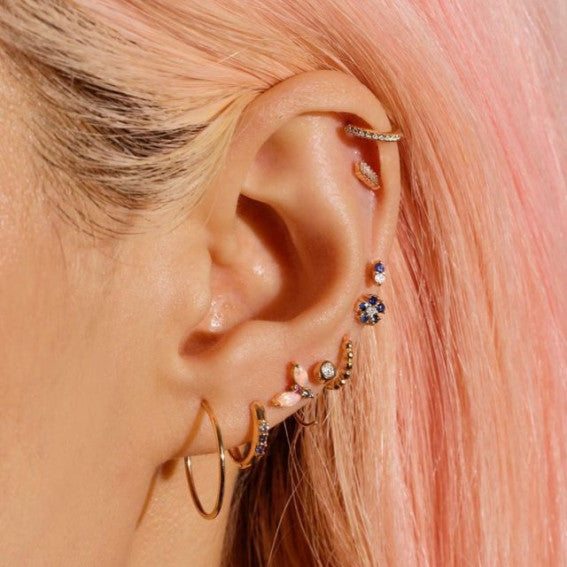
If you have a conch, forward helix, helix and multiple lobe piercings, use the tragus as a small point of sparkle rather than another large feature. A round crystal, polished opal-style stone or smooth gold bead provides visual breathing room among hoops and charms.
A useful rule is to vary the silhouettes. If your conch has a hoop, choose a stud for the tragus. If your upper cartilage is filled with stones, keep the tragus plain. That contrast gives each piercing space to be noticed.
Fit matters as much as the front design
A beautiful tragus stud will not feel luxurious if the bar is too long, too short or the gauge is wrong. Many tragus piercings use a 1.2mm gauge, but jewellery specifications are not universal. Check your existing piece or ask your piercer before changing it, particularly if you were pierced with a different gauge.
Bar length depends on your anatomy and on whether the piercing is fully healed. A well-fitted healed piercing often needs a shorter labret post than it did during initial swelling, but do not guess. Jewellery that is too tight can cause pressure and irritation; jewellery that is too long can move, snag and collect build-up.
Threading also affects your experience. Threadless and internally threaded labrets are popular because the insertion end is smooth, which is kinder to the piercing channel than external threads. Whichever style you choose, make sure the top is fitted securely. A loose stud is easy to lose when changing clothes, brushing hair or removing headphones.
Style safely if your tragus is still healing
A fresh tragus piercing is not ready for styling experiments. Cartilage can take many months to settle, and changing jewellery too early may lead to irritation, swelling or a prolonged healing process. Keep the jewellery recommended by your piercer in place and follow their aftercare advice rather than swapping to a smaller, prettier top before the piercing is stable.
Once healed, choose quality materials that suit your skin and lifestyle. If you know you react to certain metals, do not rely on a coating or a bargain price. Premium body jewellery should feel as good as it looks, particularly in a piercing you may wear every day.
Clean hands are essential whenever you touch the jewellery. Remove hair products, skincare and make-up gently from around the area, and be mindful of pressure from earbuds and over-ear headphones. If the tragus becomes hot, sore, swollen or produces persistent discharge, leave the jewellery in place and speak to a qualified piercer or healthcare professional.
Make the look feel like yours
The most wearable tragus styling does not need to follow a strict formula. A tiny gold star can be your signature detail against an otherwise grown-up ear stack. A plain silver disc might be exactly what allows your statement lobe jewellery to shine. The right choice depends on your anatomy, metal preference and how your ear jewellery fits into the way you actually dress and live.
At London Loves Body Jewellery, the best curated ears are built gradually. Choose one tragus stud you will enjoy wearing on an ordinary Tuesday, then let the rest of your collection grow around it.