
Can Earrings Cause Irritation? Causes and Fixes
That favourite pair of hoops should not leave your lobes hot, itchy or sore by the end of the day. So, can earrings cause irritation? Absolutely - but the earring itself is only part of the picture. Metal composition, plating, fit, a healing piercing and even product build-up can all make ears unhappy.
The good news is that irritation is usually a useful signal rather than something you simply have to put up with. A few considered changes can make wearing statement studs, stacked lobes and everyday huggies feel far more comfortable.
Can earrings cause irritation in healthy piercings?
Yes. Even a piercing that has been settled for years can become irritated when it meets a material or style that does not suit it. The most common cause is contact sensitivity, often linked to nickel. Nickel can be present in lower-quality mixed metals and in some jewellery coatings. For people with a nickel sensitivity, the reaction may appear as itching, redness, dry skin, tenderness or a weepy patch around the hole.
That does not mean every reaction is an allergy. Heavy earrings can pull on the lobe, tight backs can press into the skin, and rough edges or worn plating can create friction. A pair that feels fine for a few hours may become uncomfortable after a long day, particularly if you sleep in it, wear headphones or have hair products sitting around the piercing.
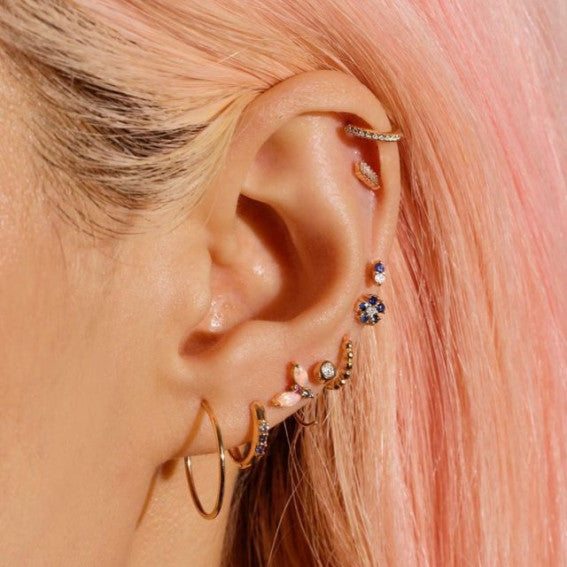
Cartilage placements such as helix, conch and tragus piercings need even more care with sizing. These areas have less soft tissue than a lobe, so a hoop that is too snug or a bar that leaves no room for natural swelling can quickly feel tender. Jewellery should complement the placement, not fight it.
Why your earrings might be making ears sore
The metal is not working for your skin
A piece can look gold or silver without being made from a metal your skin enjoys wearing. Costume jewellery is often designed for occasional use, not long-term contact with a piercing. Its base metal may contain nickel, and thin plating can wear away over time, exposing what lies beneath.
Higher-quality materials are a smarter starting point, though no material offers a universal guarantee. Solid 18k gold is a beautiful premium choice for healed piercings, but the alloy still matters if you are highly sensitive. Sterling silver is a classic choice for established lobe piercings and everyday styling, yet it can tarnish and is generally not the first choice for a fresh or still-healing piercing. Keep it clean and dry, and stop wearing it if your skin reacts.
If you have had repeated reactions, look for jewellery with clearly stated materials rather than relying on appearance alone. Professional piercing advice can help you choose a suitable option for your specific placement and skin history.
The fit is too tight, too heavy or simply wrong for the placement
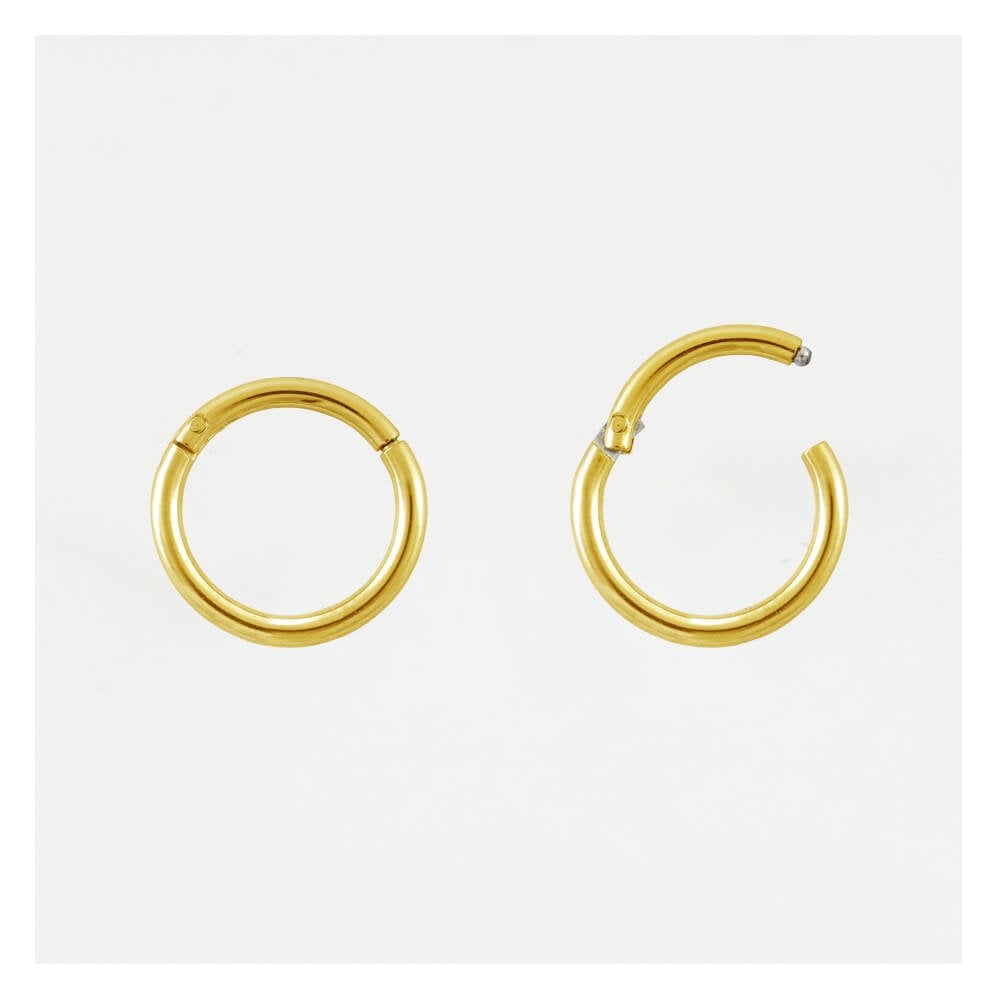
Comfort is not just about the metal. A butterfly back pushed tightly against the lobe traps moisture and puts pressure on the piercing channel. Conversely, an oversized hoop can snag on hair, scarves and knitwear, causing tiny movements that keep the area irritated.
Weight matters too. A large drop earring may be perfect for a few hours out, but daily wear can stretch or fatigue a lobe piercing. If your ears feel sore only when wearing particular styles, try a lighter stud, a small huggie or a flatter-backed design for everyday use. Save dramatic pieces for occasions when you will not be wearing them from morning to night.
For cartilage jewellery, gauge, bar length and hoop diameter all need to suit the anatomy. A cute design is never worth forcing into a piercing or wearing under constant pressure.
Your piercing is still healing
A fresh piercing can look calm before it is fully healed. Lobes often settle sooner than cartilage, but healing is individual and can be affected by sleep, snagging, illness and aftercare. Swapping jewellery too early, handling it frequently or trying to turn it can prolong irritation.
New piercings should be fitted with appropriate, professionally selected jewellery and left alone as much as possible. Do not use sterling silver, mystery metals or fashion earrings in a healing piercing just because they match your outfit. Once the piercing is genuinely healed, you have much more freedom to build the look you want.
Build-up, moisture and skincare are getting involved
Shampoo, dry shampoo, hairspray, perfume, fake tan, moisturiser and make-up can collect behind earring backs and around a piercing. Sweat and moisture add to the mix. This can cause a dull, sticky residue that irritates skin and makes jewellery look less brilliant.
Remove healed-piercing jewellery when appropriate, wash it gently according to its material, rinse away residue and dry it thoroughly before putting it back in. Clean hands matter too. Touching or changing earrings with unwashed hands is an easy way to transfer bacteria and grime to an already sensitive area.
What to do when earrings irritate your ears
First, take out the suspected pair if the piercing is healed and the jewellery appears to be the trigger. Give the skin a break rather than trying to cover up discomfort with another pair immediately. Gently rinse the area with sterile saline or clean water, then pat dry with a clean disposable towel or gauze. Avoid harsh antiseptics, alcohol, hydrogen peroxide and heavily fragranced products, which can dry and aggravate the skin.
For a healed lobe piercing, allow the irritation to settle before introducing a clean, high-quality pair in a suitable material. Keep the style lightweight and avoid tight backs. If a particular pair repeatedly causes a reaction, retire it from direct skin contact - no matter how good it looks in the jewellery box.
If you suspect an allergy, it can help to keep a simple note of which metals and finishes you have worn. Reactions can be inconsistent because different pieces may use different alloys, plating thicknesses or backs. A pharmacist, GP or dermatologist can advise on persistent skin reactions and possible patch testing.
Do not remove jewellery from a new piercing without speaking to your piercer or a medical professional, especially if there are signs of infection. The channel can begin to close, and removing it may complicate matters.
Irritation or infection: when to get help
Mild irritation usually stays local and improves when pressure, moisture or unsuitable jewellery is removed. Infection tends to look and feel more serious. Seek advice from a GP, NHS 111, or your piercer if you have worsening pain, pronounced swelling, spreading redness, heat, thick yellow or green discharge, a fever or feel generally unwell.
A small amount of pale fluid or crusting can occur during normal healing, particularly with cartilage piercings, so it is not always a reason to panic. What matters is the overall pattern: symptoms that are escalating, intensely painful or accompanied by illness need proper attention. Do not diagnose an infection from a photograph or rely on social-media advice alone.
Choosing earrings that feel as good as they look
The best everyday jewellery is the pair you forget you are wearing. Start with verified materials, then think about the demands of your routine. If you wear earrings to the gym, sleep in them or layer them across multiple piercings, streamlined designs and secure, comfortable closures are likely to serve you better than heavy or sharply detailed styles.
For a curated ear, balance fashion pieces with dependable staples. A small premium gold stud, a delicate hoop or a polished silver design in a healed lobe can provide the base, while a more expressive Gothic charm or seasonal piece can take centre stage when the occasion calls for it. London Loves Body Jewellery selects pieces with real piercing experience in mind, because placement, comfort and finish matter just as much as the design.
Check jewellery regularly for discolouration, scratches, loose stones, worn plating and damaged clasps. A beautiful earring has reached the end of its direct-wear life when its surface is compromised or it no longer feels comfortable.
Your ears do not need you to tolerate discomfort for the sake of a look. Choose jewellery that suits your piercing, listen when your skin objects and let comfort be part of your personal style - not the compromise you make for it.