
Ear Cuffs: Style Without Another Piercing
A well-chosen ear cuff can change the whole mood of your ear stack in seconds. It adds shape, shine and a little edge without committing to another piercing appointment, which makes it ideal for experimenting with a bolder look or filling out a curated ear for the evening.
The best part is how personal they feel. A fine silver cuff can bring a clean, minimal finish to everyday studs, while a textured gold design, crystal detail or sculptural shape can make even a simple lobe stack feel considered. The key is not piling on every piece you own. It is choosing a cuff that looks like it belongs with the jewellery you already wear.
What are ear cuffs?
Ear cuffs are non-pierced pieces of ear jewellery designed to sit securely around the outer rim of the ear, most often the helix. Unlike a hoop or stud, they do not pass through a piercing. Most have a small opening that lets you slide the cuff onto the thinner upper part of your ear, then move it into the position where it feels comfortable and secure.
They are not all made in the same way. Some cuffs have a gently adjustable open band, while others are shaped with a fixed opening and should not be forced wider. There are also ear climbers and wrap-style designs that create a similar visual effect but sit across more of the ear. Reading the product description matters, especially when you are buying a more structured design.
For anyone who loves the look of a full ear stack but is not ready for another piercing, a cuff is the easiest route to more dimension. It is also a useful styling piece if you are building a look for a wedding, holiday, party or gift without needing to plan around healing time.
How to put on an ear cuff properly
A cuff should feel secure, not tight. The most comfortable placement is usually around the upper or mid-helix, where the ear cartilage is slightly thinner than the outer edge. Start at the narrowest part of the ear, slide the cuff over, then carefully move it down or around to your chosen spot.
Once it is in place, give your head a gentle shake. If it moves too freely, it may need a very small adjustment if the design allows one. If it pinches, leaves a deep mark or feels sore after a few minutes, take it off and reposition it. Jewellery should enhance your day, not distract you from it.
Do not repeatedly bend a cuff in and out of shape. This is particularly important with sterling silver, plated finishes and designs set with stones. Constant reshaping can weaken the metal or affect the finish over time. A properly fitted cuff should only need minor adjustment, if any.
Finding the fit for your ear shape
Ear anatomy varies more than people expect, so a cuff that sits perfectly on one person may feel loose or restrictive on another. Petite, slim cuffs tend to suit smaller ears or a delicate stack. Wider bands and statement wraps often need a little more room on the helix to sit flat and comfortably.
If your ear has a pronounced curve, a narrow open cuff can be easier to position than a thick fixed band. If you prefer a bolder look, consider wearing one substantial cuff rather than several tight ones. The result is more polished, and it gives your ear space to breathe.
Avoid placing a cuff directly over an irritated, newly pierced or healing area. Even though the cuff does not require a piercing, pressure and friction can make a sensitive spot feel worse. If you are unsure about placement around existing piercings, a professional piercer can give practical advice based on your anatomy and jewellery setup.
Choosing a metal that suits your style
Material is not just about appearance. It affects comfort, durability and how often you will reach for the piece. Sterling silver ear cuffs have a bright, cool-toned finish that works beautifully with silver studs, chains and minimalist lobe jewellery. They are a classic choice for everyday styling, though they should be cared for properly to keep their shine.
Gold-toned cuffs add warmth and can make a simple ear stack feel more elevated. An 18k gold design is a lasting investment for those who wear gold daily, while carefully chosen gold-plated pieces can offer the same rich look for occasional styling. Check the material details before buying, particularly if you have sensitive skin or wear your jewellery for long days.
Mixing metals can look intentional rather than mismatched. Try a slim gold cuff with silver hoops if you want contrast, then repeat one metal elsewhere in your look through a necklace, ring or bracelet. If you prefer a cleaner finish, keep the cuff within the same metal family as the jewellery nearest to it.
Ear cuff styling ideas that look considered
The strongest ear stacks have a focal point. If your cuff is chunky, twisted, pavé or shaped like a snake, star or flower, let it be the feature and keep nearby piercings understated. A small huggie in the lobe and a fine stud above it will frame the cuff without competing for attention.
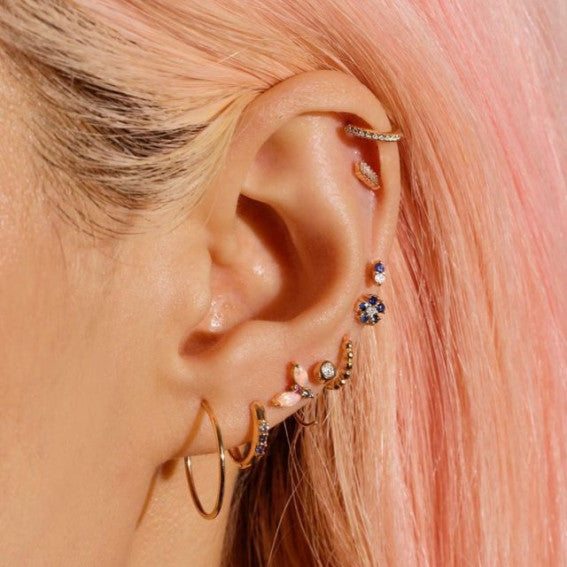
For a softer everyday look, place a narrow smooth cuff high on the helix and pair it with two or three simple lobe pieces. This creates the impression of a fuller ear without looking overdone at work, university or a relaxed weekend lunch. A single cuff on one ear also looks great with an asymmetrical arrangement on the other.
If you have a conch, tragus or helix piercing, use a cuff to bridge the gaps between your existing jewellery. A tiny crystal cuff can echo the sparkle of a stone-set stud, while a polished silver band can balance a more detailed hoop. Think about spacing as much as style. Pieces that sit too close together can make the ear look crowded, especially on a smaller ear.
For a night out, choose texture or contrast. Pair a statement cuff with a sleek black outfit, layer it with a Gothic-inspired hoop, or add a celestial motif for something more playful. The cuff makes it easy to try a trend without buying a whole new piercing collection.
Wearing cuffs with glasses, headphones and hair
Your daily routine affects which cuff will be most practical. If you wear glasses, choose a low-profile design on the upper helix that will not constantly catch against the arm of the frame. For regular headphone wear, a slim cuff is usually more comfortable than a wide wrap or dangling design.
Hair can also make a difference. Loose hair may catch on ornate cuffs, while an updo gives a statement piece its moment. Before heading out, check that the cuff feels secure after putting on your glasses, scarf or coat. Those small checks are far better than searching for lost jewellery at the end of the day.
Keeping your cuff looking its best
Take your ear cuff off before showering, swimming, sleeping or applying hairspray, perfume and skincare directly around it. Product residue can dull the surface and make stone-set details lose their sparkle. Wipe the piece with a soft, dry jewellery cloth after wear, then store it separately so it does not rub against harder items.
Sterling silver can naturally tarnish over time, particularly when it is exposed to moisture or stored in humid conditions. That does not mean the piece is poor quality. Gentle polishing and dry storage will help restore its brightness. For plated jewellery, avoid abrasive cleaning products and excessive polishing, as these can wear through the finish.
At London Loves Body Jewellery, the focus is on style-led pieces selected with real piercing knowledge behind them. That means you can build a look with more confidence, whether you are choosing your first cuff or adding a finishing detail to an established ear stack.
The right cuff should feel like an extension of your own style, not a compromise because you did not get another piercing. Start with a shape you will genuinely wear, fit it with care, and let one well-placed piece do the talking.