
Nose Screws: Fit, Comfort and Everyday Style
A nostril stud that keeps slipping out can make even the prettiest jewellery feel like hard work. Nose screws are designed to solve that problem with a curved post that sits inside the nostril, giving a neat, secure finish without a visible backing. They are a brilliant choice when you want your piercing to look polished from the outside and feel comfortable through a busy day.
The right piece is not only about choosing a crystal, star or tiny gold bead you love. Gauge, metal, nostril placement and the shape of your nose all affect how a nose screw feels. A well-fitted design should stay put without pressing, snagging or making you aware of it every time you smile.
What are nose screws?
A nose screw is a nostril stud with a curved, corkscrew-like stem. The decorative top sits flat against the outside of the nostril, while the curved section rests inside to help hold the jewellery in place. Unlike an L-shaped stud, there is no sharp right angle sitting inside the nose. Unlike a labret stud, there is no flat disc at the back.
This makes nose screws a favourite for healed nostril piercings. They offer a tidy, low-profile look and tend to feel more secure than a straight pin, particularly once you are used to inserting them. The curved post also means the jewellery is less likely to fall out when removing make-up, changing clothes or drying your face.
They are made for nostril piercings, not septum piercings. If your piercing sits through the centre of the nose, a ring, horseshoe or clicker is the more suitable style.
Why the fit matters more than the sparkle
Nose screws are often described as one-size-fits-most, but bodies are not standardised. The distance between the outside of your nostril and the inner curve varies from person to person. A post that is too long can move around, catch on a towel and feel distracting. One that is too short may create pressure, leave an indentation or be difficult to insert comfortably.
Gauge is equally important. Many nostril piercings in the UK are performed at 0.8 mm, often called 20 gauge, while others are pierced at 1 mm or 18 gauge. Do not force a thicker stem into a smaller healed channel, and do not assume a finer gauge will be secure simply because it goes in easily. Check the size of your current jewellery or ask your piercer before ordering.
Placement changes the equation too. A high nostril piercing may need a different curve from one positioned closer to the edge of the nostril. If your current stud sits beautifully and you are switching styles, use it as your reference point. Note its gauge, the thickness of the post and whether its backing has ever rubbed or protruded.
Choosing a metal for everyday wear
For a fully healed piercing, premium materials make a noticeable difference to comfort and appearance. Skin sensitivity, lifestyle and how often you plan to wear the piece should guide your choice.
Solid 18k gold brings a warm, elevated finish and works especially well for tiny stones, celestial motifs and understated nostril studs that you never need to take out. Look for quality gold jewellery rather than plated fashion pieces where the coating may wear away over time. If you have a known nickel sensitivity, make sure the composition is appropriate for you.
Sterling silver has a bright, versatile look and suits occasional styling, gifting and those who like to change their jewellery with their outfit. However, silver can tarnish and is not usually the first recommendation for a fresh or irritated piercing. Save it for a well-healed nostril, remove it before swimming or applying skincare where possible, and clean it gently to keep its shine.
Implant-grade titanium is often the practical answer for sensitive skin and newly healed piercings, although the finish may be more understated than gold. It is light, hard-wearing and commonly recommended by professional piercers. If your piercing is still healing, follow your piercer’s advice on jewellery material and avoid changing it early simply to match a new look.
Inserting a nose screw without the struggle
The first few attempts can feel fiddly. The trick is to work slowly rather than pushing the curve straight through. Start with clean hands and clean jewellery. Hold the decorative top on the outside of your nostril, feed the end of the post into the piercing, then gently rotate the curve through the channel until the top rests against the skin.
It can help to angle the post slightly downwards and towards the inside of the nostril as you turn it. Stop if you feel sharp pain, resistance or a burning sensation. A healed piercing should not require force. Take the jewellery out, check that you have the correct gauge and try again later, or ask a piercer to fit it for you.
Avoid repeatedly taking a nose screw in and out just to practise. Even mature piercings can become sore when handled too much. Once it is fitted, leave it alone for a few days and let your nose settle into the new shape.
Nose screws versus L-bends and labret studs
Every nostril stud style has a place. Nose screws are discreet and secure once fitted, making them ideal for everyday wear and petite decorative tops. Their trade-off is that they are slightly more involved to insert than a straight-post design.
L-bends are quick to put in and take out. They can be handy if you enjoy changing your look regularly, but some wearers find they move more easily or poke inside the nostril depending on the placement. A correctly fitted L-bend can still be very comfortable, but it is less forgiving if the wearable length is wrong.
Flat-back labret studs use a straight post with a small disc inside the nostril. They are a popular choice for people who want a very secure fit, especially when sleeping or wearing glasses. They can be easier to manage if you prefer threadless or internally threaded jewellery, although the disc may be noticeable for some nostril shapes.
There is no universal winner. If you want a classic nostril stud with no visible backing, a nose screw is hard to beat. If you prioritise the easiest jewellery change, an L-bend may suit you better. If maximum security is the goal, ask a professional piercer whether a flat-back labret is right for your anatomy.
Styling a nostril screw with the rest of your jewellery
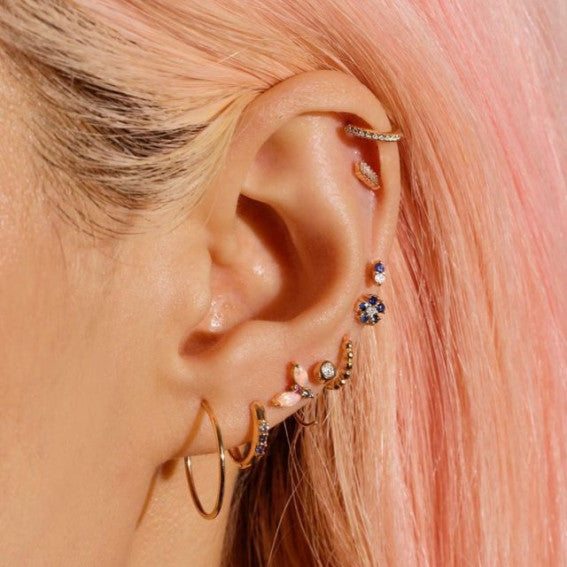
Small does not have to mean plain. A tiny clear stone gives a clean, light-catching finish that works with every outfit, while a black crystal, mini moon or delicate floral top adds personality without overwhelming your face. Gold tones look particularly striking alongside warm hoops and layered necklaces; silver creates a crisp match with curated ear stacks and cooler-toned details.
Consider proportion before choosing a larger top. A 2 mm to 3 mm stone can look refined and effortless for daily wear, while a more detailed design makes a stronger statement for nights out or special occasions. If your nostril piercing is close to the crease of your nose, a smaller, flatter top is often more comfortable and less likely to catch.
At London Loves Body Jewellery, pieces are chosen with real piercing experience in mind, so style does not have to come at the expense of suitability. Start with the metal and gauge that work for your piercing, then choose the detail that feels most like you.
Keeping your nostril jewellery looking its best
Once your piercing is healed, basic care keeps a nose screw comfortable and bright. Clean around the outside of the piercing while washing your face, rinse away make-up and skincare residue, and dry gently with a clean towel. Do not twist the jewellery unnecessarily.
When you remove the stud, wipe it with a suitable jewellery-cleaning cloth or cleanser recommended for its metal. Keep silver pieces dry and stored separately when not worn to slow tarnishing. Gold jewellery benefits from gentle cleaning too, especially if you use foundation, SPF or setting spray around the nose.
If you notice ongoing redness, swelling, heat, discharge, a persistent bump or sudden discomfort, change neither jewellery nor aftercare products at random. Speak to a reputable professional piercer first. They can assess the fit and material, which is often more useful than guessing from a mirror.
The best nose screw is the one you forget you are wearing until it catches the light. Choose the right gauge, give the curve time to settle, and let the design do the talking.