
Piercing Jewellery Buying Guide for Better Fits
That tiny hoop might look perfect in a photo, but the wrong gauge, diameter or metal can turn a brilliant new addition into an uncomfortable one. This piercing jewellery buying guide is here to make choosing feel easier: start with your placement and fit, then choose a material and finish that suits both your skin and your style.
Good body jewellery is not just decoration. It sits in a living piercing, moves with you and needs to feel as good at the end of a long day as it does when you first put it in. Whether you are building a polished curated ear, changing a healed nostril stud or buying a gift, a few details make all the difference.
Start with the piercing, not the trend
Every placement has its own proportions. A belly bar needs enough length to sit comfortably through the navel without catching on waistbands. A tragus stud needs a flat back that does not press uncomfortably into the ear when you sleep. A hoop that sits beautifully in a lobe may be too wide or too tight for a helix.
Before browsing styles, identify the jewellery type your piercing takes. This is usually straightforward: labrets are popular for ears and lips, curved bars suit placements such as the navel and eyebrow, straight bars are common for nipples and industrials, while rings and hoops work across many healed placements. The detail that matters next is the fit.
If you already wear jewellery that feels right, measure that piece rather than guessing. You will normally need to know the gauge, the thickness of the wearable bar, plus the bar length or internal diameter. Jewellery measurements are often listed in millimetres, so take your time and check whether a product refers to the wearable length rather than the overall decorative length.
A close fit can look sleek, especially for lobes, daiths and nostrils, but jewellery should never feel pinched. Equally, a bar that is too long can snag in hair, clothing and headphones. Cartilage can be particularly sensitive to pressure, so a slightly roomier fit is often more comfortable if you are still getting used to a new placement.
Piercing jewellery buying guide: choose your metal wisely
The material against your skin affects comfort, longevity and how confidently you can wear a piece every day. Sensitive skin is not unusual, and irritation is often mistaken for an infection when the real issue is unsuitable metal, a rough finish or jewellery that does not fit well.
For a fresh piercing, follow the advice of your professional piercer. Healing jewellery is a separate choice from fashion jewellery. Implant-grade titanium is a frequent first-choice material because it is light, body-safe and suitable for many people with metal sensitivities. High-quality solid gold can also be appropriate in certain cases, but your piercer should guide you on the correct specification and fit for a healing piercing.
For healed piercings, sterling silver and 18k gold designs offer a more elevated jewellery feel, especially when you want refined details, charms or coordinated looks. Sterling silver is a beautiful choice for occasional wear and healed placements, but it is not generally the go-to for newly pierced skin or for wearing continuously in a piercing that gets wet often. It can oxidise over time, and some people find it less comfortable than titanium or solid gold for round-the-clock wear.
Gold needs a closer look too. Solid gold, gold vermeil, gold-filled and gold-plated jewellery are not interchangeable. A plated finish can be a stylish, more accessible way to bring warm gold tones into your collection, but the coating may wear with frequent friction, perfume, swimming and showering. Check the product details so you know exactly what you are buying and can wear it accordingly.
Nickel is another consideration. If you have reacted to inexpensive earrings before, choose jewellery made with a clearly stated, high-quality material and avoid mystery metals. Premium jewellery should tell you what is touching your skin - you should not have to guess.
Get the measurements right
The most common buying mistake is choosing a design by appearance alone. A piece can be made beautifully and still be wrong for your anatomy. Measurements are practical, but they are also what make a carefully styled ear or nose piercing look intentional rather than awkward.
Gauge refers to thickness. In body jewellery, a lower gauge number means a thicker bar. Do not force a thinner or thicker piece into an existing piercing without professional advice, particularly in cartilage. Changing gauge can cause irritation and may affect how the piercing sits.
Bar length is the wearable section between the ends of a barbell or labret. For flat-back studs, measure from the base of the disc to the start of the threaded or push-fit section, depending on the design. Internal diameter is used for hoops and rings: it is the distance across the inside of the ring, not the outside edge.
Anatomy matters as much as numbers. Two people may have the same helix placement but need different hoop diameters. A conch hoop needs to travel around the outer ear, while a nostril hoop must sit comfortably without pulling the piercing forward. If you are unsure, keep your existing jewellery in place and ask an experienced piercer to measure it before ordering.
Closure styles make a difference
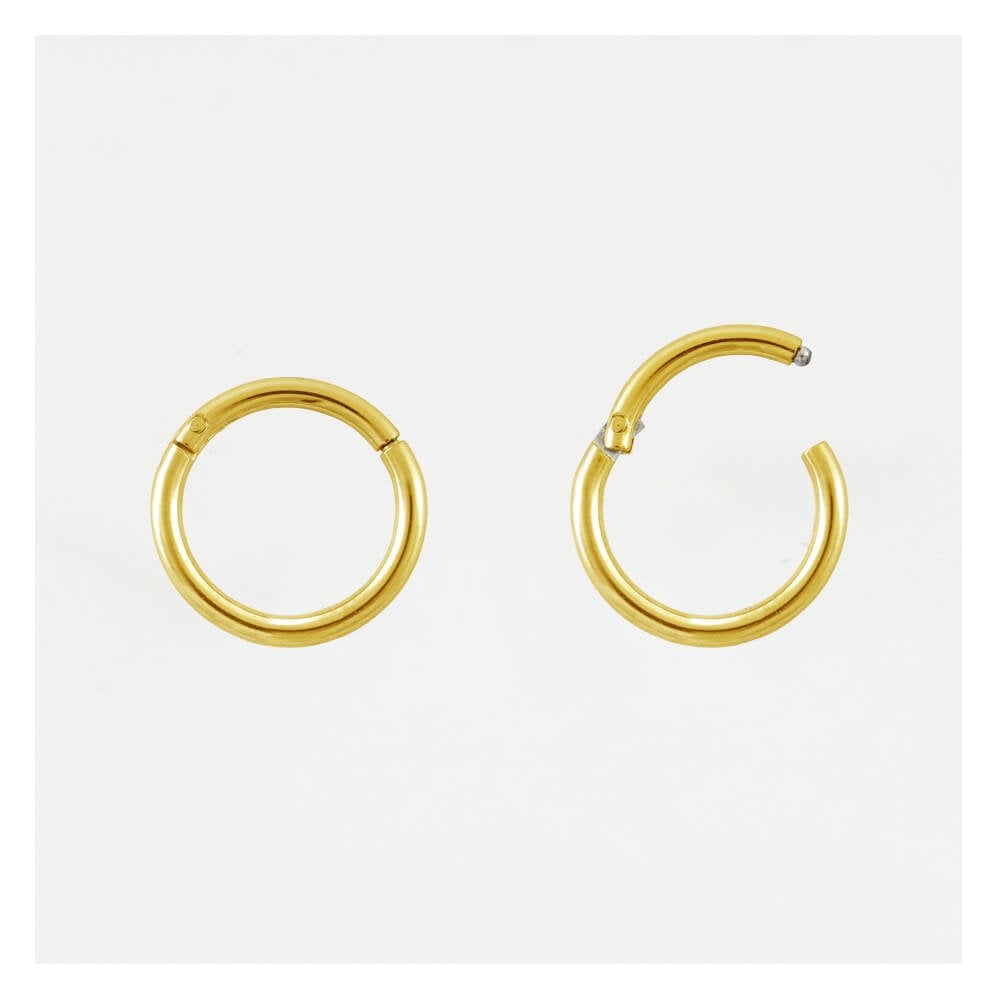
Threaded balls, flat-back labrets, clicker hoops and hinged rings all have their place. Threaded jewellery is secure but can be fiddly with long nails. Push-fit ends are easy to change once you have the technique. Clickers are wonderfully convenient for healed daith, septum and lobe piercings, although the hinge should not be pulled through a piercing channel if it feels rough or catches.
For everyday ear styling, flat backs are a favourite for good reason. They sit neatly against the skin, are kinder to pillows and make layers of lobe, tragus and helix jewellery feel less bulky. For a statement look, a charm hoop or textured clicker brings movement without needing extra piercings.
Match your jewellery to your real life
The best piece is not always the boldest one. Think about where the piercing sits during work, exercise, sleep and getting dressed. A large charm may be ideal for a night out but impractical under a cycling helmet. A smooth, low-profile stud can be the smarter choice for a busy week, with more expressive pieces saved for weekends and special plans.
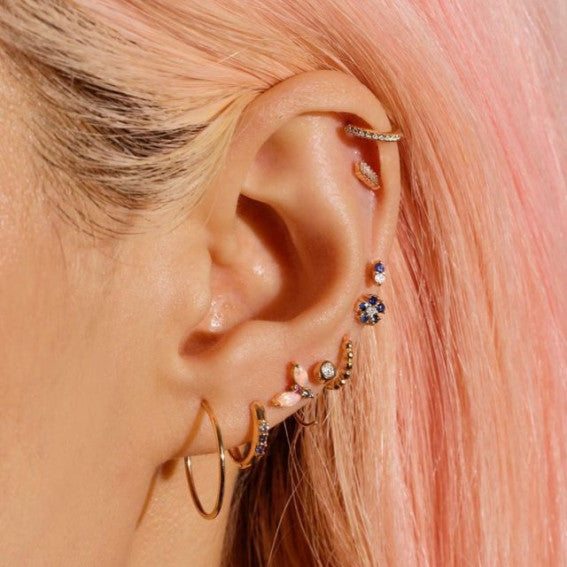
For a curated ear, create balance rather than trying to make every piece compete. Start with one focal point - perhaps a gold conch hoop, a star-shaped lobe stud or a Gothic-inspired charm - then add simpler pieces in complementary tones. Matching metals makes a collection feel considered, while mixing silver and gold can work beautifully when repeated deliberately across the ear.
Nose jewellery benefits from the same approach. A discreet nostril stud can be an effortless everyday signature, while a clicker ring changes the mood completely. With navel and nipple jewellery, comfort and secure ends tend to matter even more than detail, as these placements are more likely to encounter clothing and movement.
Care protects the finish and your piercing
Take jewellery out before swimming, showering or applying lotions when the material or finish is not designed for constant exposure. Wipe healed-piercing jewellery gently with a soft, dry cloth after wear, especially sterling silver, and store pieces separately to reduce scratches and tangling. Avoid harsh chemical cleaners, which can damage stones, plating and decorative coatings.
Never change jewellery in a piercing that is sore, swollen, leaking or not fully healed. If a piece will not come out easily, do not force it. A professional piercer can help with stubborn threaded ends, tricky clickers and fit checks without traumatising the piercing.
Buy for comfort, then make it yours
The most stylish jewellery is the piece you forget you are wearing - until someone notices it. At London Loves Body Jewellery, our collections are chosen with placement, quality and self-expression in mind, from understated sterling silver essentials to distinctive 18k gold designs and themed pieces with personality.
Give yourself permission to choose the practical stud first and the dramatic hoop second. Once the fit and material are right, building a jewellery collection becomes the fun part: a small way to make an everyday look feel unmistakably yours.