
Piercing Jewellery Sizing: Find Your Best Fit
A helix hoop that looks beautifully snug on one ear can pinch on another. A navel bar may technically fit, yet catch on waistbands all day. That is why piercing jewellery sizing is about more than choosing a pretty design - the right gauge, length and diameter make the difference between jewellery you reach for daily and a piece that stays in its box.
Body jewellery is measured differently depending on its style and placement. Once you know which measurement matters, shopping for a refined gold piece, a sterling silver charm or a standout Gothic detail becomes much more straightforward.
Piercing jewellery sizing: the three measurements that matter
Most body jewellery is described using gauge, wearable length and diameter. They sound similar, but each answers a different question.
Gauge is the thickness of the post, bar or ring itself. It may be shown in gauge (g) or millimetres (mm). The slightly confusing part is that a lower gauge number means a thicker piece of jewellery. For example, 16g is thicker than 18g.
Wearable length is the distance between the two ends of a straight bar that sits inside the piercing. On a labret, it is measured from the base of the flat disc to the start of the thread or attachment. On a curved barbell, it is measured along the inside of the curve.
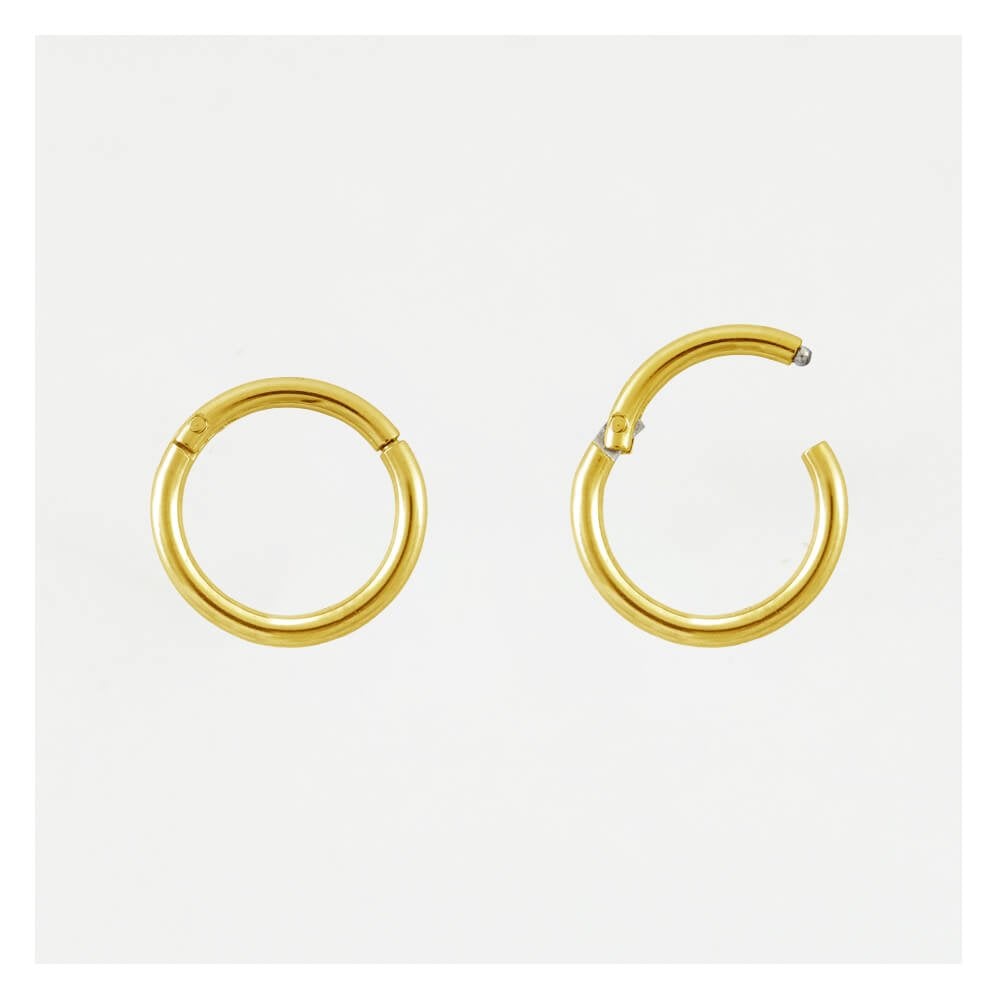
Diameter is used for hoops, clickers and circular barbells. It means the inside width of the ring, not the outside edge. This is the measurement that decides whether a hoop sits close and neat or hangs with more space.
Jewellery can also have a ball, charm or decorative top measurement. That affects the look of the piece, but it is not the fit measurement. A larger end can make a bar feel less discreet, especially in a tragus or forward helix, even when the post itself is perfectly sized.
A quick gauge guide
For many UK piercing jewellery styles, these are the sizes you will see most often:
| Gauge | Approximate thickness | Often used for |
| --- | --- | --- |
| 20g | 0.8mm | Nostril studs and fine nose hoops |
| 18g | 1.0mm | Nostril jewellery, some ear piercings |
| 16g | 1.2mm | Helix, tragus, conch, navel and nipple jewellery |
| 14g | 1.6mm | Navel and nipple jewellery, larger placements |
These are useful reference points, not universal rules. A lobe piercing may take 20g, 18g or 16g depending on how it was pierced and what you usually wear. Never move up a gauge by force just because you love a particular design. If the post does not pass through easily in a healed piercing, choose the correct size or ask a professional piercer for advice.
How to measure jewellery you already own
The easiest way to buy a replacement that fits is to measure a piece you already wear comfortably. A digital calliper gives the most accurate reading, but a ruler marked in millimetres can help with larger measurements.
For a straight bar or labret, remove the decorative end if possible and measure only the post from end to end. Do not include the ball, gem setting or flat disc in the length. For a hoop, lay it flat and measure the inside distance from one edge to the other. Measure the inner space, because that is where your ear, nose or other placement needs to sit.
If you cannot remove an end, check any packaging, receipt or previous order details first. Guessing from a photograph is rarely reliable: a 6mm and 8mm labret can look almost identical until you wear them.
It is also worth measuring at a calm point in the day. Freshly slept-on cartilage, warm weather and irritation can all make a piercing look more swollen than usual. Jewellery should not feel tight under normal day-to-day conditions.
Choosing the right fit for each piercing
Placement changes everything. The same 8mm bar may be ideal in one area and far too short in another because anatomy, tissue thickness and the angle of the piercing vary.
Lobes, helix and flat piercings
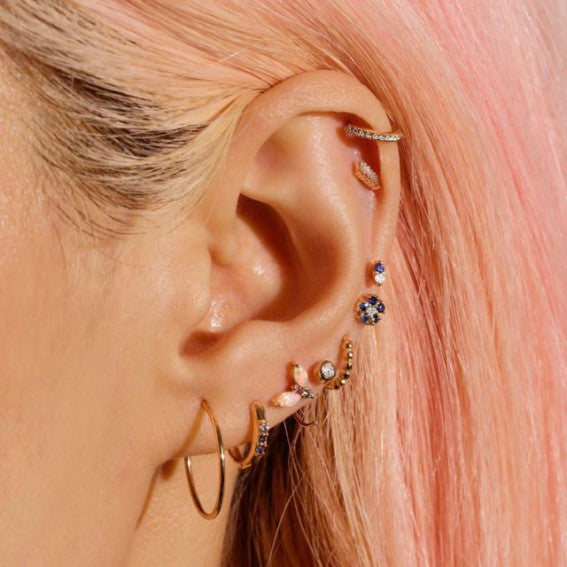
Lobe jewellery has the widest range of comfortable fits. A small flat-back stud often works well when you want a clean, close-to-the-ear finish, while hoops need enough diameter to clear the lobe without pulling. If you are building a curated ear, matching metals can make different sizes feel intentional rather than busy.
Helix and flat piercings often suit short labrets once fully healed, commonly around 6mm to 8mm, but this depends on your ear. A post that is too long can catch in hair and on jumpers. Too short can cause pressure, especially if the area occasionally swells. For hoops, choose the diameter based on where the piercing sits along the rim - higher placements often need a slightly larger diameter than people expect.
Tragus and conch jewellery
Tragus piercings are usually best in a flat-back labret rather than a traditional butterfly-back earring. The flat disc sits more comfortably against the ear, particularly with headphones or when talking on the phone. Decorative tops should be chosen with everyday wear in mind: a delicate crystal or star can sit beautifully, while a large charm may catch more easily.
Conch piercings can be styled with a labret or hoop. The hoop diameter is especially personal here. A close-fitting ring creates a polished, minimal look, but it must still clear the outer ear without pressing into cartilage. If you want a relaxed, statement hoop, a larger diameter gives the design room to show.
Nose jewellery
Nostril jewellery is commonly 20g or 18g, though your own piercing should always set the rule. The post style matters as much as the gauge. A flat-back labret is a secure choice for many people, while L-shaped and corkscrew nose studs need the right bend and wearable length to stay comfortable.
For a nostril hoop, measure the distance from the piercing hole to the edge of your nostril, then allow enough room for the ring to sit without digging in. A very snug hoop looks sleek, but only if it does not place constant pressure on the piercing.
Navel and nipple jewellery
Navel bars are often 14g with a wearable length around 10mm, but there is no single correct length. Anatomy and swelling history matter. A bar that is too long can move and catch, while one that is too short can press into the skin. Curved barbells should follow the natural line of the placement rather than pulling the top and bottom holes together.
Nipple jewellery is also commonly 14g, with bar length varying considerably. Measure a comfortable bar between the two ball ends, not including the balls themselves. If you are switching to an ornate design, consider the extra weight and width of the ends. A dramatic piece can look incredible for an evening, while a smoother, lighter bar may be the better everyday choice.
Fit should feel secure, not tight
A good fit allows the jewellery to sit neatly without embedding, pinching or constantly rotating because it is too loose. A small amount of visible post can be normal depending on the placement and jewellery style. The aim is not to make every piece as tight as possible - it is to give your piercing enough room to stay comfortable while keeping the look considered.
Be particularly cautious with a new or healing piercing. Initial jewellery is usually longer to allow for swelling, and changing it too early can irritate the channel or introduce bacteria. A professional piercer can assess when it is ready to downsize and which measurements suit your anatomy. This is one occasion where a quick expert check is far better than trial and error.
Material and design still matter
Sizing is only one part of a jewellery choice. A well-fitted piece made from quality materials is more likely to become a favourite. Sterling silver and 18k gold designs bring a more elevated finish to a curated collection, but suitability can depend on the placement, your sensitivities and whether a piercing is fully healed.
Consider your routine too. Smooth, low-profile studs are practical for work, sleep and gym sessions. Hinged hoops offer a tidy finish for healed piercings, while charm styles and themed details give an outfit more personality when you want your jewellery to take centre stage. London Loves Body Jewellery curates pieces with both the placement and the final look in mind, because the best styling starts with jewellery that genuinely fits.
When you know your gauge, length or diameter, save it in your phone alongside the piercing it belongs to. It takes seconds, makes future shopping far easier, and leaves you free to choose the design that feels most like you.