
Conch Ring Diameter Guide for a Comfortable Fit
A conch hoop can make an ear stack look effortlessly pulled together - but only when it follows the natural curve of your ear. This conch ring diameter guide explains how to find a size that feels comfortable, looks intentional and gives your jewellery the premium finish it deserves.
What does conch ring diameter mean?
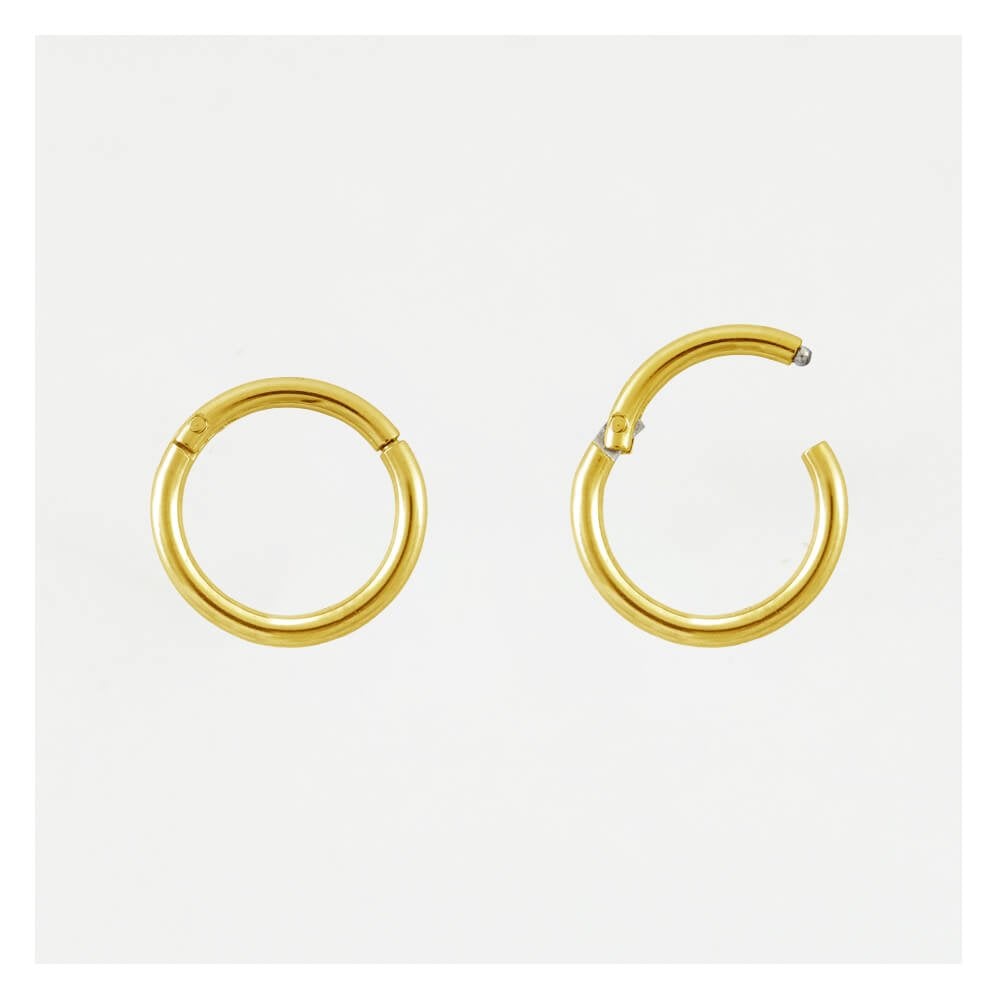
Diameter is the inside width of a hoop or ring, measured from one inner edge to the other at its widest point. It is not the thickness of the jewellery. That thickness is called the gauge, and both measurements matter when choosing a conch ring.
For a conch piercing, diameter determines how closely the hoop sits against your ear. A smaller diameter creates a neat, snug look, while a larger one leaves more space between the ring and the cartilage for a relaxed, more noticeable finish.
The right fit is not simply about choosing the smallest hoop possible. A ring that is too tight can press into the ear, catch on swelling or feel uncomfortable when sleeping. One that is too large may hang away from the conch and lose the sleek, curated look you had in mind.
Conch ring diameter guide: common hoop sizes
Most healed conch piercings suit hoops between 8mm and 12mm in diameter, although your anatomy and the placement of the piercing will always have the final say.
An 8mm hoop is usually the close-fitting option. On a smaller ear or a conch piercing positioned near the outer cartilage, it can create a chic, tucked-in look. It is a popular choice for a minimal ear stack, but it will not suit every placement. If your piercing sits further in towards the centre of the ear, 8mm may feel too restrictive.
A 10mm conch ring is often the most versatile starting point. It gives enough room to sit comfortably around many ears while still looking neat and fitted. If you are buying your first hoop after wearing a stud, 10mm is frequently a sensible size to consider.
A 12mm hoop offers more breathing room and makes a stronger style statement. It works well for higher or deeper-set conch placements, fuller cartilage, or anyone who prefers a visible circle rather than a close-hugging ring. Decorative designs, such as gemstone hoops, stars or statement charms, can also benefit from the extra space.
Some ears need a 14mm diameter, particularly where the piercing is positioned well inside the conch bowl. This is less likely to look snug, but it can be exactly right for comfort and proportion. Jewellery should work with your anatomy, not fight it.
How to measure for a conch hoop at home
The most reliable option is to ask your piercer to measure your healed piercing and confirm both the gauge and ideal diameter. If you are replacing a hoop that already fits beautifully, use that piece as your reference.
To measure at home, remove your current hoop only if the piercing is fully healed and comfortable to change. Measure the internal diameter - the empty space inside the ring - in millimetres. Do not measure the outside edge, as this includes the thickness of the metal and can lead you to order a larger size than intended.
If you currently wear a labret stud in your conch, you can also use a flexible strip of paper. Hold it gently along the route a hoop would take from the piercing hole around the outer edge of your ear, then mark the point where it reaches the hole again. This gives an approximate circumference rather than a precise diameter, so treat it as a guide rather than a final answer.
Avoid pulling the paper tightly against the cartilage. A conch hoop needs a little clearance for everyday movement, warmth and the natural shape of the ear. The aim is comfortable contact, not compression.
Check the position, not just the size of your ear
Two people can have similarly sized ears and need completely different conch hoops. The placement of the piercing matters just as much as the shape of the ear.
A piercing closer to the outer rim generally needs a smaller diameter because the hoop has less distance to travel. A piercing placed deeper in the conch bowl needs a larger hoop to reach around the cartilage without pulling. The angle of the piercing can affect the fit too, especially if it was pierced slightly forward or back.
This is why an 8mm ring may look perfectly fitted on one person and uncomfortably tight on another. Size charts are useful, but your ear is the real guide.
Diameter and gauge: do not confuse the two
A hoop can have the right diameter and still not fit if the gauge is wrong. Gauge refers to the thickness of the post that passes through the piercing. For conch jewellery, 1.2mm, often called 16 gauge, is a common size. Some piercings may be 1.6mm, or 14 gauge, especially depending on how and where they were pierced.
Never force a thinner or thicker ring through the piercing. A thinner piece may move more than you like and, over time, can irritate or alter the channel. A thicker piece simply may not go in comfortably. If you are unsure, check the jewellery you were pierced with or speak to a professional piercer before changing it.
When shopping, look at the full specification: material, gauge, internal diameter and fastening style. A beautifully designed hoop is only useful when every measurement suits the piercing.
Choose the look you want from your conch ring
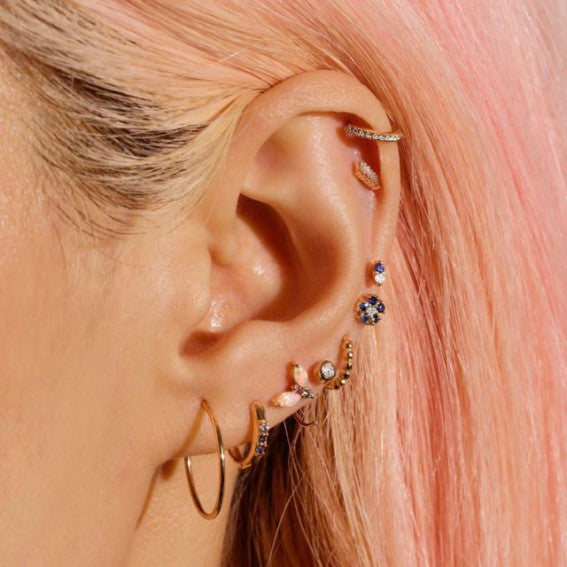
Once you know your comfortable diameter range, style becomes much easier. A closer 8mm or 10mm hoop gives a clean, modern outline that works particularly well beside tiny lobe studs, huggies and delicate helix pieces. It keeps the focus on the curve of the ear and suits an understated, polished stack.
A 12mm or 14mm hoop has more visual presence. It can balance chunkier lobe jewellery, complement a bolder helix piece or create a focal point in a more expressive ear curation. If you love gothic details, charms, textured finishes or sparkling stones, a little extra diameter lets the design be seen properly.
There is also a practical trade-off. Close-fitting hoops can feel more secure and are less likely to catch in hair, while larger hoops may be easier to handle and can be more forgiving around a deeper piercing. Neither is automatically better. It comes down to placement, comfort and the style you want to wear every day.
When is it safe to change from a conch stud to a hoop?
A conch piercing usually needs a substantial healing period before it is ready for a ring. Cartilage can appear settled on the outside while still healing inside, so changing too early can lead to irritation, swelling and a difficult fit.
Your original stud is generally chosen to accommodate swelling and support healing. A hoop moves differently through the piercing channel, which is why experienced piercers often recommend waiting until the piercing is fully healed before making the switch. For many people, this can take six to 12 months, and sometimes longer.
If there is tenderness, heat, persistent crusting, swelling or any resistance when moving the jewellery, it is not the moment to change it at home. Let a professional piercer assess it instead. It is worth being patient for a hoop that feels good from the first wear.
Material matters for everyday comfort
The diameter may be perfect, but low-quality metal can still spoil the experience. For a healed conch, choose jewellery made from skin-friendly, high-quality materials that suit your sensitivities and intended wear.
Sterling silver and 18k gold designs bring a more elevated finish to a healed ear stack, particularly for occasional wear or carefully chosen everyday pieces. For long-term, continuous wear, speak to a piercer about the most suitable material for your skin and piercing history. If your ear is prone to irritation, prioritise comfort and compatibility over a trend-led shape or finish.
At London Loves Body Jewellery, our approach is simple: choose pieces that look special, but make sure they are appropriate for the placement too. A well-fitted conch hoop should feel like part of your ear, not something you are constantly aware of.
A quick check before you order
Before choosing your new ring, confirm the gauge of your piercing, measure the internal diameter of a hoop you already love, and think about whether you want a snug or more relaxed silhouette. Consider where the piercing sits in your conch rather than relying on a standard size alone.
If you are between two diameters, the larger option is often more comfortable, especially for a first hoop. Once you know how your ear responds, you can always try a closer fit for a different look. The best conch ring is the one that sits naturally, complements your style and still feels comfortable from your morning coffee to lights out.