
Ear Lobe Jewellery Guide for a Curated Look
A great ear stack rarely starts with the boldest piece. It starts with jewellery that sits comfortably, suits the placement and gives you options to build around it. This ear lobe jewellery guide is for anyone choosing their first everyday stud, refreshing a healed piercing or creating a full curated look with premium pieces that feel as good as they look.
Lobes are wonderfully versatile, but they are not all the same. Placement, piercing angle, post length and the stage of healing can all affect what works best. Choosing with those details in mind means your jewellery looks polished rather than crowded, and stays comfortable from the morning commute to a night out.
Start with your lobe placement
The lobe has more room than most cartilage piercings, which makes it ideal for styling. A standard first lobe piercing is usually centred on the softest, fullest part of the lobe. Second and third lobe piercings may sit higher, closer together or follow the natural curve of your ear. That changes the scale of jewellery that will look balanced.
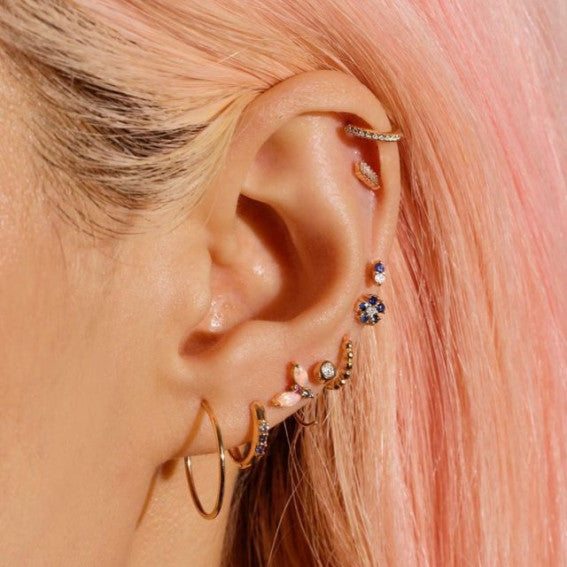
For a single lobe piercing, a classic stud, small hoop or fine drop can do all the work. With two or three lobe piercings, think of the ear as a small collection rather than a row of identical pieces. A statement piece in the first lobe, a neater hoop or gemstone stud above it, then a tiny sparkle or symbol in the third placement creates contrast without losing cohesion.
If your lobe piercing sits lower or your lobes are particularly full, you may prefer a slightly longer post or a hoop with more internal diameter. If the piercing is placed higher, a compact flat-back stud or close-fitting huggie often gives a cleaner finish. There is no one-size-fits-all answer - the right proportion depends on your ear and the jewellery’s measurements.
Choose the right metal for everyday wear
Material matters, especially for jewellery you plan to leave in for weeks or wear daily. Skin sensitivity is individual, but premium materials are a sensible place to begin when comfort and longevity are priorities.
Sterling silver offers a bright, classic finish and works beautifully for occasional wear, curated stacks and pieces you like to switch frequently. Look after it properly, as silver can naturally tarnish over time, particularly when exposed to water, perfume, hairspray and lotions. A soft jewellery cloth and dry storage will help bring back its shine.
18k gold jewellery brings warmth, richness and a more elevated finish to an ear stack. It pairs especially well with pearls, clear stones, celestial motifs and textured designs. Gold tones are also easy to mix with silver when done intentionally: try making one metal dominant, then add a single contrasting detail rather than splitting every piercing evenly between the two.
For a fresh or still-healing piercing, follow the advice of your professional piercer before changing jewellery. Healing tissue needs stability, appropriate sizing and materials selected for initial piercing wear. Fashion-led pieces are best saved until the piercing is fully healed and ready for a change.
Think about fastening as well as finish
The back of your jewellery has a real effect on daily comfort. Butterfly backs are familiar and easy to remove, but can catch in hair or press against the ear if worn overnight. Flat-back labret styles sit more smoothly behind the lobe, making them a strong choice for sleepers, headphone wearers and closely spaced lobe piercings.
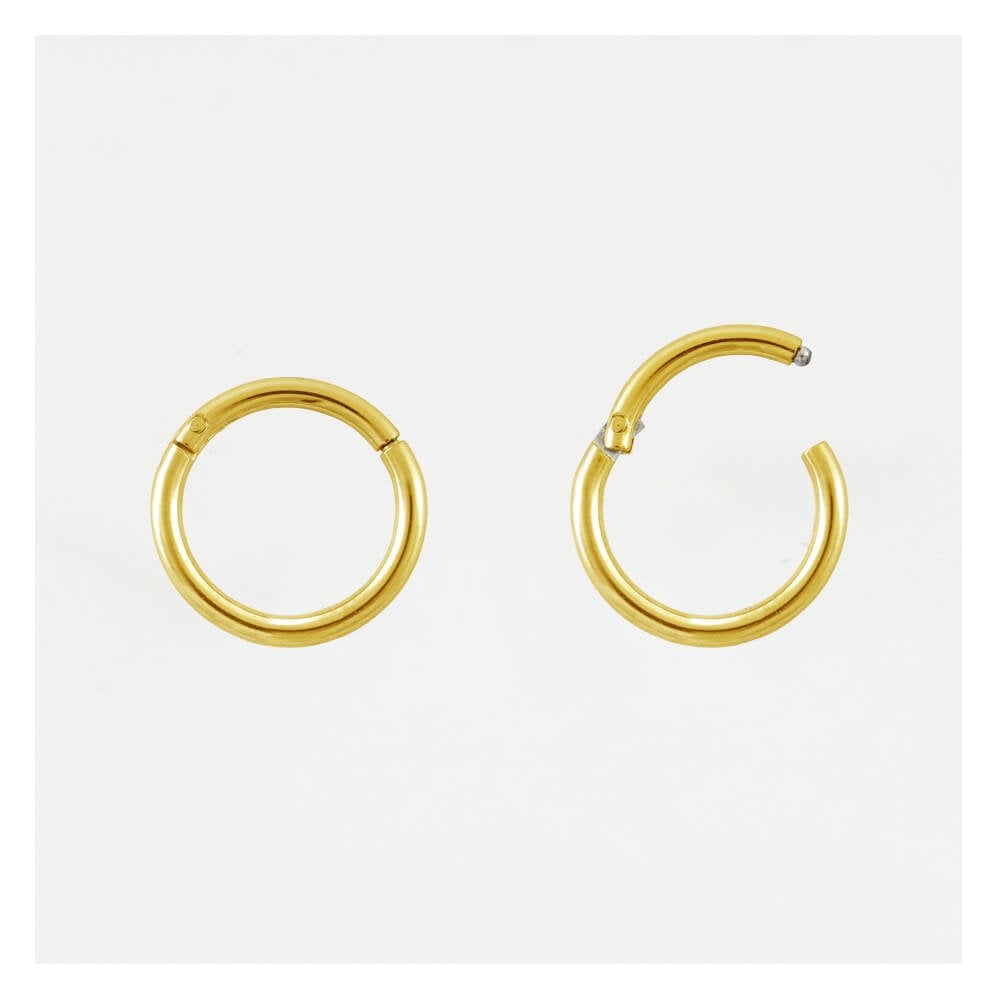
Clicker hoops and hinged huggies are popular for their tidy profile and simple closure. They should click securely into place without needing force. If a hoop feels tight, pinches the lobe or is difficult to close, size up rather than trying to make it work. Jewellery should enhance your day, not demand your attention every hour.
Ear lobe jewellery guide to gauges and sizing
For many UK lobe piercings, 1.2 mm is a common gauge for body jewellery, while traditional high-street studs may use a thinner post. Never assume two pieces will be interchangeable just because they look similar. Gauge, wearable length and the fastening style all need to work with your existing piercing.
Post length is measured from the wearable area, not the decorative front. A post that is too short can create pressure and swelling; one that is too long can move around, snag and make a neatly styled ear look less refined. Healed lobes often suit a shorter, more fitted post, but this depends on lobe thickness and where the piercing sits.
Hoop diameter deserves the same attention. A small huggie should hug the lobe with a little breathing room, not sit so tightly that it pulls. A larger hoop can be striking in the first lobe, especially when balanced with minimal studs above it. If you are between sizes, choosing the more comfortable diameter is usually the better call.
Build a lobe stack that looks intentional
Matching sets have their place, particularly when you want an easy gift or a ready-made look. But a curated ear does not need every piece to match exactly. Repeating a detail - a gold tone, a tiny stone, a gothic motif or a soft pearl - can tie different shapes together far more effectively than buying three identical studs.
Start by choosing a focal point for the first lobe. This could be a polished hoop, an ornate charm, a shimmering stone or a distinctive animal-inspired design. Keep the next piercing more compact, then use the highest lobe placement for a delicate accent. The change in scale lets each piece be seen.
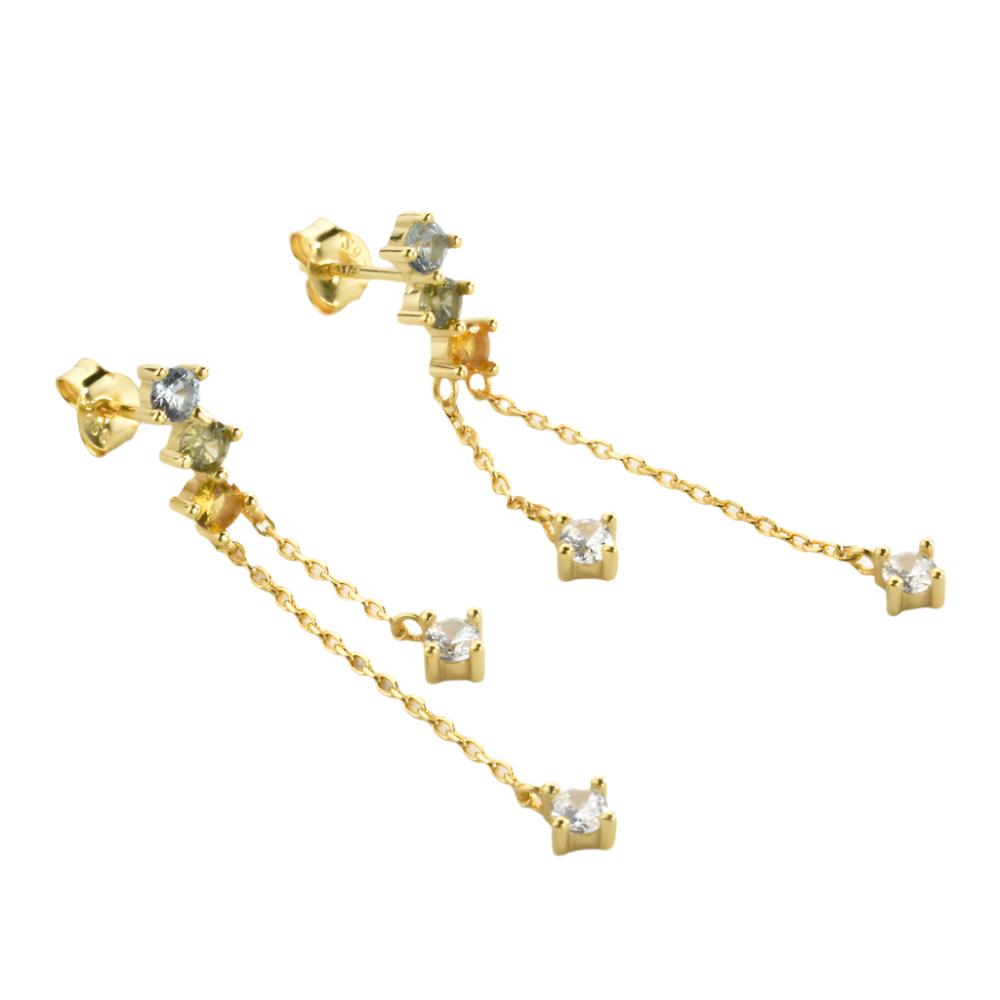
For a more understated weekday look, try a small gold huggie with a clear stone stud and a fine silver ball stud. For evenings, swap the first-lobe piece for a drop, charm hoop or a bolder gothic design while leaving the smaller piercings in place. This approach gives you variety without having to rebuild the entire ear every time.
If you wear helix, conch or tragus jewellery too, keep the lobe stack slightly lighter than the cartilage pieces. A busy lobe combined with multiple statement cartilage piercings can feel visually heavy. Alternatively, make the lobes the main event and let the upper ear stay simple. Both work - the key is deciding where you want the eye to land first.
Mixing silver and gold without making it feel random
Mixed metals look considered when there is a pattern. You might choose gold for your first lobe and silver for every smaller placement, or wear mostly silver with one 18k gold charm as the standout detail. Stones, pearl details and black accents can act as a bridge between the two metals.
Avoid mixing finishes only because they are what you have to hand. If the result feels accidental, remove one piece and reassess. A little space is often more stylish than filling every available piercing.
Care that keeps your jewellery looking premium
Take lobe jewellery out carefully when needed, keeping a towel or tray underneath so small pieces do not disappear down the sink. Wipe jewellery gently after wear, especially after using hair products, moisturiser or fragrance. Store individual pieces separately where possible to reduce scratches and tangles.
Remove jewellery before swimming where practical, particularly sterling silver pieces. Chlorine, salt water and beauty products can dull the surface and speed up tarnishing. Check clasps and threaded ends regularly too. A loose fastening can turn a favourite earring into an expensive loss.
London Loves Body Jewellery selects pieces with the needs of real piercing wearers in mind, so you can shop by placement while still choosing something that reflects your style. That specialist approach matters when a tiny difference in fit can transform how a piece wears.
Your lobes are the easiest place to experiment, so let them evolve with you. Choose one piece you genuinely love, make sure the fit is right, then add the next detail when it earns its place in the stack.