
Forward Helix Jewellery Guide for Better Fit
A forward helix is a small piercing with a big effect on a curated ear. Sitting at the front of the upper cartilage, close to the face, it catches the light beautifully and gives even a simple lobe stack a more considered finish. This forward helix jewellery guide covers the details that matter most: fit, materials, comfort and the styling choices that make this piercing feel distinctly yours.
What jewellery works in a forward helix?
The most common choice for a forward helix is a flat-back labret stud. It has a smooth disc behind the ear and a decorative top at the front, so it is comfortable for everyday wear and less likely to snag in hair than a butterfly-back earring. From petite crystal studs to polished gold balls, tiny stars and delicate marquise clusters, the visible top does the styling while the post keeps the fit secure.
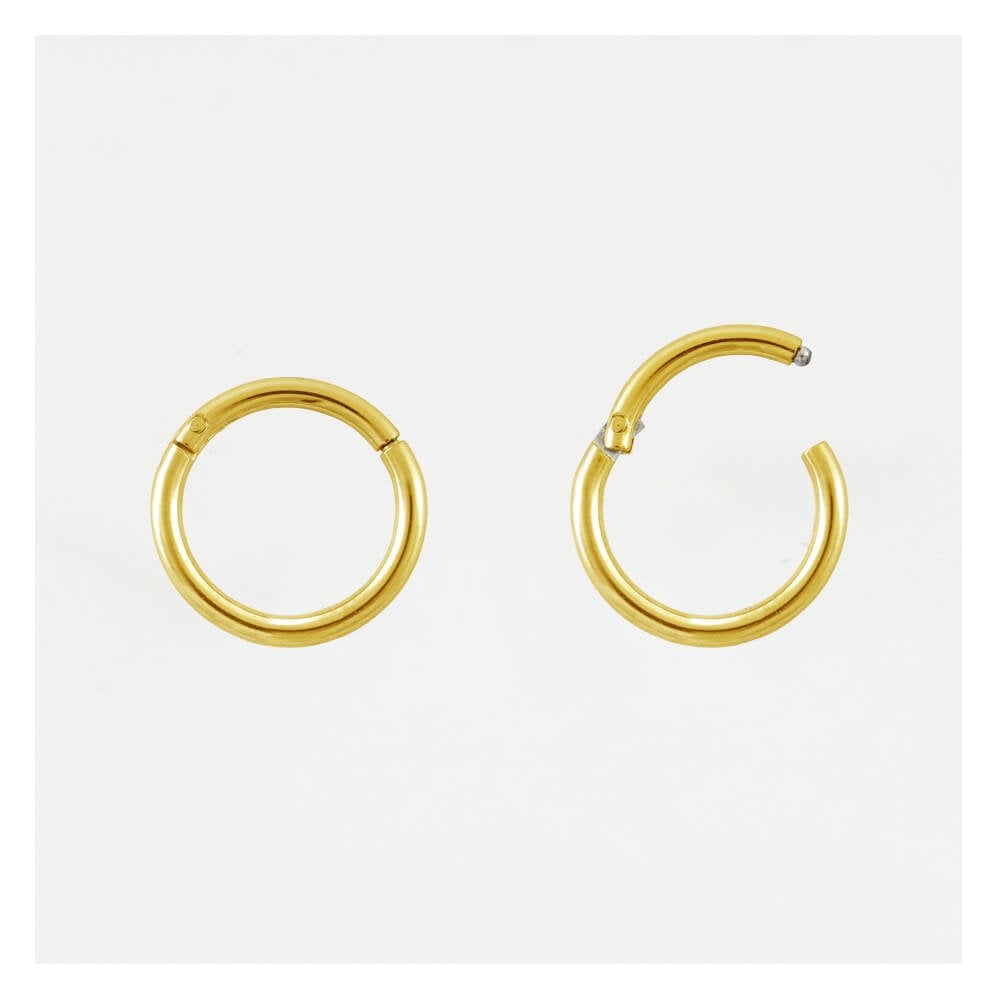
Hoops can look fantastic in a fully healed forward helix, particularly when you want to connect the piercing visually with a helix or lobe stack. They are not always the best first choice, though. A ring moves more than a stud, and that movement can irritate a new cartilage piercing or make an already-temperamental one feel sore. If your piercing is fresh, stick to the jewellery fitted by your professional piercer until they confirm it is ready to change.
Curved bars and ornate pieces are sometimes available, but suitability depends on your anatomy and the angle of the piercing. Forward helixes sit in a compact area, so a design that looks perfect in a product photo may be too large, too heavy or too close to another piercing in real life. Small-scale jewellery usually gives the cleanest result.
Gauge and post length: the fit behind the sparkle
For UK cartilage piercings, 1.2mm, often called 16 gauge, is a common post thickness. Some forward helix piercings are fitted at 1mm or 18 gauge instead. Never guess based on another ear piercing, as using the wrong gauge can cause discomfort and may damage the piercing channel.
Post length matters just as much. Fresh piercings need extra room to allow for swelling, which is why the initial bar can look longer than you expected. Once the swelling has settled, a piercer may recommend downsizing to a shorter post. This helps stop the jewellery catching, tilting forwards and knocking against your glasses, hair or headphones.
A healed forward helix often wears a 5mm or 6mm post, but there is no universal measurement. Cartilage thickness, piercing angle and the shape of your ear all affect the right wearable length. A snug fit should not mean pressure. If the disc is pressing into the skin, the top is leaving a deep mark or the area feels tender, the bar may be too short. If the post is visibly shifting and catching, it may be too long.
Forward helix jewellery guide to metals
Material is not simply a finish choice. It affects how your piercing feels, particularly while it is healing.
For a new or irritated forward helix, implant-grade titanium is widely trusted by professional piercers because it is lightweight, durable and suitable for many people with metal sensitivities. Solid gold from a reputable body jewellery maker can also be a beautiful option once a piercer has confirmed the specification is suitable. Look for solid 14k or 18k gold rather than plated jewellery, where the surface layer can wear over time.
Sterling silver has a place in a jewellery collection, especially for healed piercings and occasional styling, but it is not usually the first material a professional piercer would choose for a fresh cartilage piercing. Silver can tarnish, and prolonged moisture exposure may affect its appearance. Save your sterling silver forward helix pieces for a piercing that is fully settled, and remove them if you notice any irritation or discolouration.
The same care applies to gold-plated fashion jewellery. It can be ideal for a short evening look in a healed piercing, but it is not the dependable everyday answer for a new piercing. Premium materials cost more upfront, yet they offer better comfort, longevity and confidence - especially in a placement you will notice every time you tuck your hair behind your ear.
Threading and closure choices
Flat-back studs tend to use internally threaded or threadless fittings. With internally threaded jewellery, the screw thread sits on the detachable top rather than the post, helping to avoid rough edges passing through the piercing. Threadless jewellery uses a slightly bent pin that pushes into the post, offering a neat, secure fit with easy top changes once you know how it works.
Externally threaded pieces are still sold in some places, but they are less refined for cartilage wear because the thread passes through the piercing. If comfort and long-term wear are priorities, internally threaded or threadless options are usually worth choosing.
Choosing a top that flatters your ear
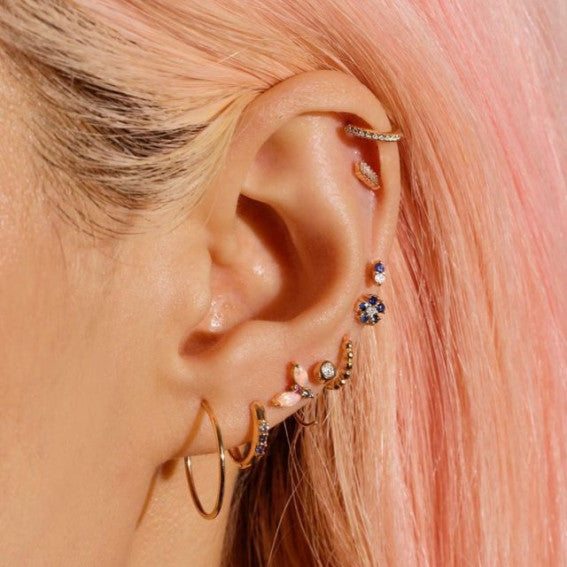
Forward helix jewellery looks its best when the scale works with the rest of your ear. This is a small, prominent placement, so a 2mm to 4mm top is often enough to make an impact without crowding the area. If you have more than one forward helix, matching tiny studs create a clean line, while graduating sizes can make the stack look softer and more bespoke.
For an understated everyday look, choose a polished ball, bezel-set crystal or petite opal-style stone. These pieces work neatly alongside gold huggies, a conch hoop or a simple lobe set without competing for attention. If you prefer a more styled ear, try a tiny lightning bolt, celestial motif, heart or black stone detail. The key is to repeat one element elsewhere: the same metal tone, a similar stone colour or a complementary shape.
Gold gives a warm finish that pairs beautifully with layered chains and mixed lobe jewellery. Silver-toned titanium or sterling silver can create a crisp, cooler look, especially with clear crystals or gothic-inspired details. Mixing metals is also an option, but make it intentional. A gold forward helix stud can look brilliant with silver hoops when another gold detail appears in the stack to tie everything together.
Do not overlook the direction of the design. A leaf, curved cluster or lightning shape can point towards the face, upwards along the helix or back into the ear depending on how the top is fitted. Before fastening it fully, check the orientation in a mirror. A small adjustment can change the entire look.
When can you change forward helix jewellery?
Cartilage healing is rarely quick or perfectly linear. A forward helix may feel fine after a few months, then become tender after being slept on or caught with a towel. Healing time varies, but many cartilage piercings take six to 12 months to settle fully. Your piercer should be the person to confirm whether it is ready for a jewellery change.
Changing jewellery too early is one of the easiest ways to prolong irritation. Redness, heat, swelling, persistent crusting, a bump or throbbing discomfort are signs to pause the style switch and seek advice from a reputable professional piercer. Do not force a post through a resistant piercing or attempt to fix a suspected infection by removing the jewellery yourself. A medical professional should advise on infection concerns.
For a healed piercing, wash your hands thoroughly, clean the jewellery as appropriate for its material and work gently. Flat-back tops can be fiddly in this placement, so there is no shame in asking a piercer to fit a new piece, tighten a threaded top or check the length. It is a quick way to protect both your piercing and your investment.
Build an ear stack that stays comfortable
The prettiest ear stacks still need room to live in. If you wear glasses, over-ear headphones or a helmet regularly, choose low-profile tops that are unlikely to rub. Side sleepers may find that a flat-back stud and a travel pillow with an ear opening make a real difference while healing. Hairdressers, gym regulars and anyone who changes clothing over their head should be especially mindful of snag-prone designs.
Think about your forward helix as the finishing point, not an isolated piercing. A tiny 18k gold crystal can brighten a minimal lobe stack; a black stone or sculptural silver top can bring edge to a gothic ear curation. London Loves Body Jewellery selects pieces with real piercing placement in mind, because a beautiful design should feel as good at the end of the day as it did when you first put it on.
Choose the piece that suits your anatomy, your healing stage and the way you actually wear jewellery. The right forward helix stud does not need to shout - it simply makes the whole ear look more like you.