
Gold Filled Versus Plated Jewellery: Which Lasts?
A gold hoop can look perfect on day one, then start losing its warmth around the clasp after a few weeks of showers, skincare and everyday wear. That is why the difference between gold filled versus plated jewellery matters, particularly when you are choosing pieces for a curated ear, a nostril piercing or jewellery you rarely take out.
Both finishes can be beautiful. Both can give you the rich look of gold without the price of solid gold. But they are made differently, wear differently and suit different budgets, placements and lifestyles. Knowing what you are buying makes it far easier to choose a piece you will still love after the first few wears.
Gold filled versus plated jewellery: the key difference
Gold-filled jewellery has a substantial layer of gold mechanically bonded to a base metal, usually brass. It is not simply painted or flashed with gold. In many gold-filled pieces, the gold content is at least 1/20 of the item’s total weight, although specifications can vary by maker and market.
Gold-plated jewellery has a thinner coating of gold applied over a base metal. The base may be brass, stainless steel, sterling silver or another alloy. Plating thickness varies hugely, so two pieces described as gold plated can perform very differently. A fine fashion earring and a premium 18k gold-plated piercing piece should not be assumed to offer the same longevity.
Put simply, gold filled tends to have more gold to wear through, while standard plating is a surface finish. That usually makes gold filled more durable, but it does not make it indestructible or automatically the best choice for every piercing.
Where PVD gold fits in
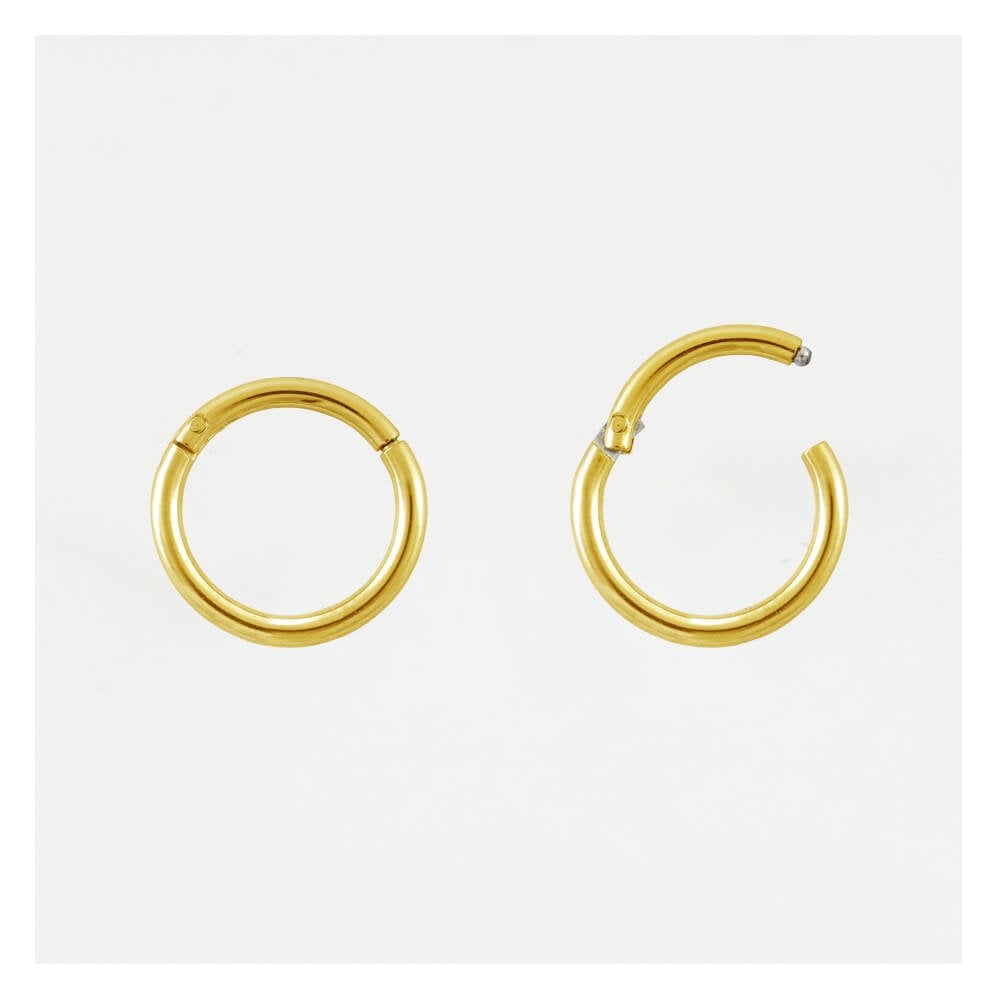
You may also see gold PVD, particularly in body jewellery. PVD stands for physical vapour deposition, a process that bonds a coating to the metal beneath it. On suitable materials, especially stainless steel and titanium, a quality PVD finish can be more hard-wearing than conventional electroplating.
That does not mean every gold-coloured item is equal. The metal underneath, the quality of the coating, how a piece is made and how it is worn all affect its lifespan. For body jewellery, details such as a smooth bar, secure threading and appropriate gauge matter just as much as the finish.
Which option lasts longer in real life?
Gold-filled jewellery is generally the stronger choice for frequent wear. Because the gold layer is thicker, it is less likely to reveal the base metal quickly at high-friction points such as butterfly backs, jump rings, clasps and the inside curve of a hoop. With sensible care, it can stay attractive for years.
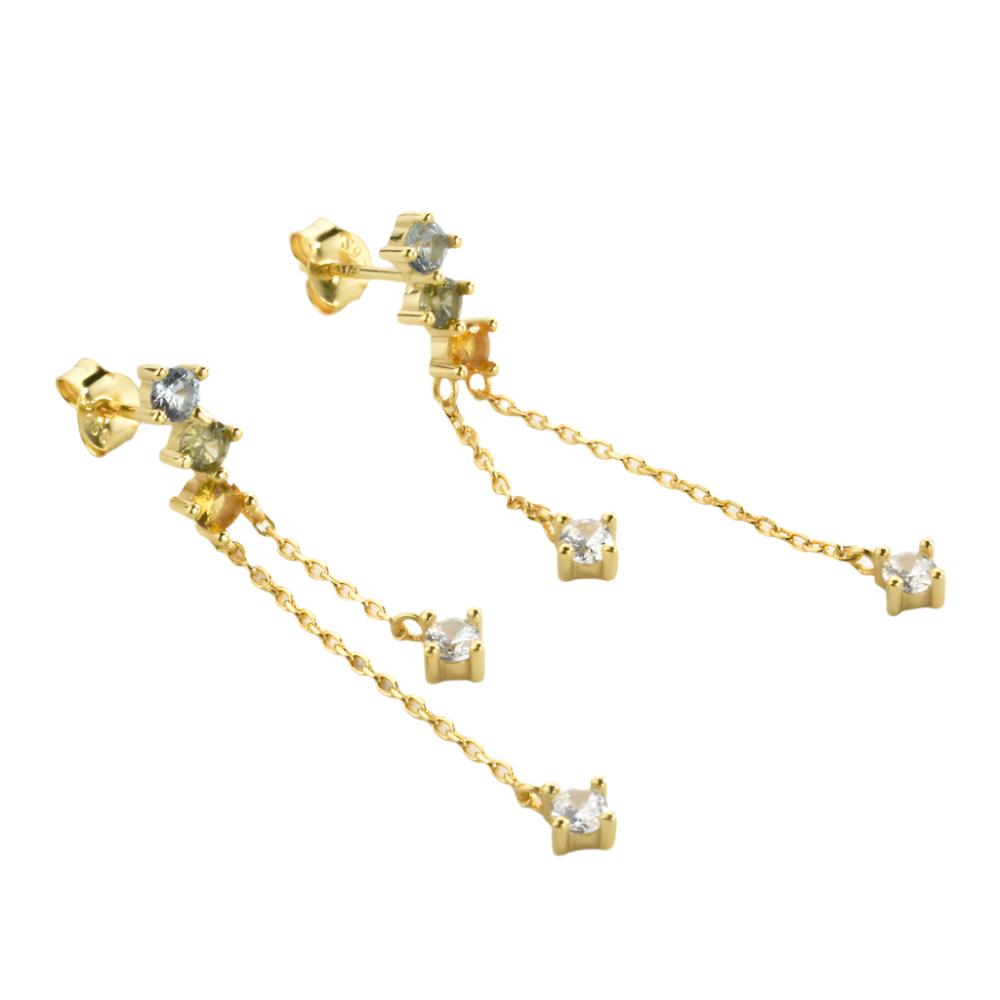
Gold plating can still be a brilliant option when you choose well and treat it kindly. It is ideal for trend-led pieces, seasonal designs and jewellery you like to switch with outfits. A delicate gold-plated charm, a statement ear stack or a themed necklace can deliver plenty of style without asking you to commit to a higher price point.
The honest answer is that wear depends on your routine. Jewellery exposed to perfume, fake tan, body lotion, hair products, sweat, sea water and chlorinated pools will fade sooner. Piercing jewellery also has more contact with skin and can experience movement that ordinary earrings do not.
If you want one pair of gold hoops to become part of your daily uniform, gold filled is usually the better investment. If you enjoy changing your look often, high-quality plated jewellery may make more sense - provided you accept that the finish is likely to need replacing eventually.
Is gold filled better for sensitive skin?
Not necessarily. Gold filled can be kinder to some wearers than low-quality plating because there is more gold between your skin and the base metal. However, sensitivity is personal, and the base metal can become relevant once the surface wears. Some people also react to particular gold alloys.
For healed body piercings, material suitability should come before colour. Implant-grade titanium is often a trusted choice for sensitive skin and can be finished with a quality gold PVD coating. Solid gold can also be appropriate when it is high quality, nickel-free and designed properly for piercing wear. Sterling silver has its place in jewellery collections, but is not usually the first choice for a healing piercing.
Fresh piercings need more care than a healed lobe or a necklace chain. Do not choose jewellery for a new piercing based on appearance alone, and do not change it before your piercer says it is ready. Ask what the wearable part of the jewellery is made from, not just whether the front decoration is gold coloured.
The best choice for different jewellery styles
For classic earrings and necklaces, gold filled is a lovely middle ground. It gives a more lasting finish than standard plating while keeping the price more approachable than solid gold. It is especially worth considering for simple chains, sleepers and pieces you plan to reach for several times a week.
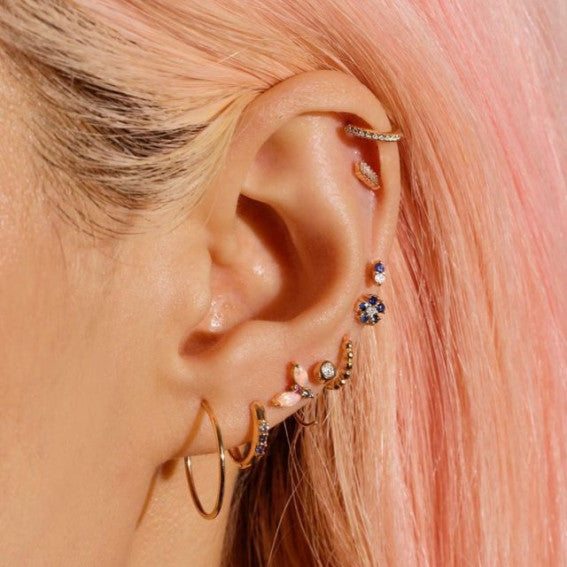
For a curated ear, the decision can be mixed. Choose longer-lasting materials for the pieces closest to the piercing and the staples you wear daily, such as helix hoops, tragus studs or lobe huggies. Then use plated charms, chains and decorative details to bring in seasonal colour and personality. This approach keeps your stack elevated without making every single element an investment piece.
Nose jewellery, belly bars and other close-fitting body pieces deserve extra attention. Sweat, movement and regular cleansing can be tougher on finishes. Look for jewellery designed for that specific placement, with comfortable sizing and a quality material in the wearable area. A pretty top is not much use if the post is unsuitable or irritating.
For gifts, plated jewellery is often an easy win. You can choose a more expressive design - gothic motifs, pet-inspired details, festive sparkle or a matching set - without needing to know that it will become the recipient’s everyday piece. Gold filled is a thoughtful step up for a birthday, milestone or someone who prefers timeless styles.
How to make gold finishes last
A little care makes a noticeable difference, whatever finish you choose. Put jewellery on after perfume, moisturiser, hairspray and makeup have settled. Take it off before swimming, showering, exercising or sleeping unless it is body jewellery intended for continuous wear.
When you remove non-piercing jewellery, wipe it gently with a soft, dry cloth before storing it separately. This helps remove oils and product residue that can dull the surface. Avoid abrasive polishing cloths, harsh cleaning solutions and ultrasonic cleaners unless the maker confirms they are suitable for the exact material and stones.
For healed piercing jewellery that remains in place, keep your usual aftercare sensible and avoid coating it in skincare or tanning products. If a plated finish begins to look patchy, it is usually time to replace the piece rather than trying to polish the colour back. Polishing can remove even more of a thin coating.
What to check before you buy
The wording on a product page should tell you more than just “gold”. Look for the base metal, the type of finish and whether the item is intended for body piercing or standard wear. For body jewellery, also check gauge, wearable length, closure style and whether the design is appropriate for your placement.
Be cautious of vague descriptions such as “gold tone” when you want a piece for daily use. That phrase describes colour, not quality. Likewise, “hypoallergenic” is not a guarantee that every sensitive wearer will be comfortable. Clear material information is more useful than broad claims.
At London Loves Body Jewellery, the most stylish choice is also the one that suits your piercing, your skin and how you actually wear it. Choose gold filled when you want a durable everyday favourite, choose plated when you want flexible fashion, and always give placement and material the attention they deserve. The right piece should feel as good as it looks.