
How to Insert Segment Rings Without the Struggle
A segment ring can give a piercing a beautifully clean, uninterrupted look, but knowing how to insert segment rings takes a little more patience than fitting a clicker. The removable section needs to sit perfectly flush with the hoop, so the aim is not to force it closed, but to handle the ring carefully and let the ends meet neatly.
Whether you are styling a helix, conch, lobe, nostril, septum, tragus or nipple piercing, this guide will help you fit your ring with less stress and protect both your jewellery and your piercing.
What is a segment ring?
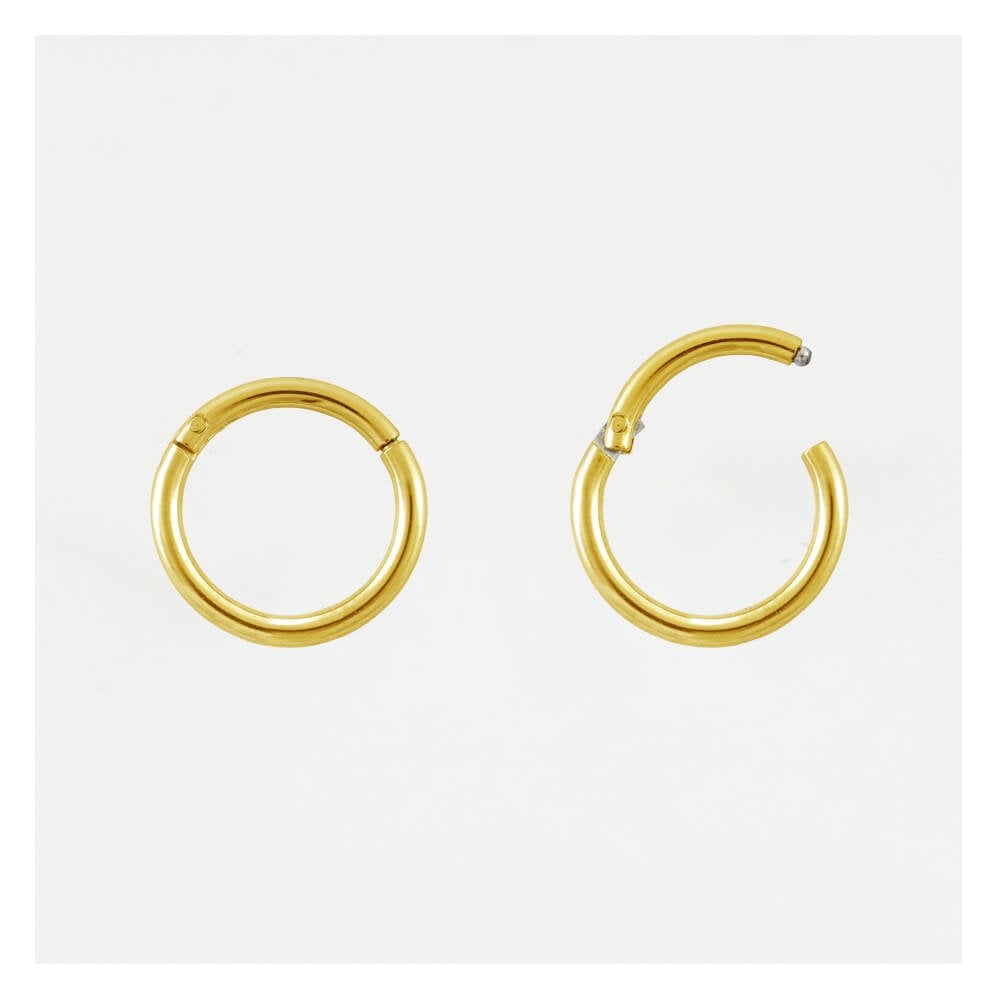
A segment ring is a circular hoop with a small removable section. Once fitted, the segment sits between the two ends of the ring, creating a smooth, continuous circle. There is no visible hinge or clasp, which is why segment rings are a favourite for a polished, minimal jewellery look.
They are not the same as clicker rings. A clicker has a hinged bar that clicks into place, while a segment ring has a fully detachable piece. That simple difference changes how you open and close it. Trying to pull a segment ring apart like a clicker can bend the metal, weaken its tension and make the segment difficult to secure afterwards.
Before you insert a segment ring
Only change jewellery in a fully healed piercing. A fresh or irritated piercing can close quickly, swell unexpectedly or become sore when jewellery is changed at home. If you are not certain that your piercing is healed, or it feels tender, leave the jewellery in place and book in with a professional piercer.
Start with clean hands, clean jewellery and a clean working surface. Wash your hands thoroughly, then rinse the ring with sterile saline or clean warm water and dry it with a lint-free tissue. Avoid harsh antiseptics, alcohol or perfumed cleaning products, as these can leave residue on jewellery and irritate the piercing.
Good lighting makes a real difference, especially for a nostril, tragus or forward helix. Stand in front of a mirror, take your time and keep a small tray or towel underneath you. Segment rings have a talent for disappearing when dropped.
Check the gauge and diameter first
Even the prettiest ring will not feel right if it is the wrong size. The gauge is the thickness of the bar, while the diameter is the width of the ring. Your new jewellery should match the gauge recommended for your piercing. Forcing a thicker gauge through a healed channel can cause discomfort and trauma.
Diameter is a style and comfort choice. A close-fitting ring can look sleek in a helix or nostril, but it should not press into the skin. A roomier diameter gives more breathing space, which can be more comfortable in areas prone to movement, such as a conch, septum or nipple piercing. If you are changing from a stud to a ring for the first time, a professional fitting is often the easiest route.
How to insert segment rings step by step
First, locate the removable segment. Hold the ring at either side of the gap, rather than gripping the segment itself. To open the ring, gently move one end forwards and the other backwards, creating a small twist in opposite directions. Do not pull both ends straight outwards. That distorts the circle and can stop the segment from fitting securely.
You only need enough space to guide the ring through your piercing. Open it gradually. If it feels unusually stiff, do not keep applying pressure with your fingers. A pair of ring-opening pliers, used carefully, gives more control and reduces the chance of bending fine jewellery.
Feed one open end of the ring through the piercing channel. Move slowly and follow the angle of the piercing rather than pushing against resistance. If the jewellery does not glide through, stop. A tiny amount of sterile saline can help, but never use force. Resistance may mean the piercing has tightened, the gauge is wrong or the angle needs adjusting.
Once the ring is through, rotate it until the gap is somewhere you can see and reach comfortably. For an ear piercing, this may mean bringing the opening to the front of the ear. For a nostril or septum ring, positioning the gap lower down can make fitting easier before you rotate the finished ring into place.
Pick up the segment and look closely at its ends. They are designed to sit inside or against the open ends of the ring. Set one end of the segment into place first, then gently bring the other side of the ring towards it using the same forward-and-backward twisting motion used to open it. The segment should settle evenly, with no obvious gaps, sharp edges or rocking movement.
When it is fitted correctly, the join should feel smooth as you run a clean fingertip over it. Give the segment a very light check. It should not fall out or shift easily, but there is no need to tug it hard. Rotate the ring so the join sits where you want it, then leave the piercing alone for a few minutes to settle.
Why the segment will not go back in
The most common issue is that the ring has been pulled open sideways. When this happens, the circle becomes oval-shaped and the ends no longer line up with the segment. Avoid squeezing it repeatedly to make it fit. Precious metals and delicate decorative rings can mark, kink or lose their spring if they are overworked.
Instead, take the ring out of your hands for a moment and check its shape. The two ends should be level with each other, not one higher, lower or wider than the other. If the ring is noticeably misshapen, a professional piercer can reshape it with the right tools. This is safer than risking scratches, a loose closure or jewellery that pops open while you are out.
A segment can also be awkward because the ring is simply too small to handle comfortably. Tiny diameters are particularly fiddly in a tragus, rook or nostril piercing. In those placements, using a tool or asking a piercer to fit it is not a failure of technique. It is usually the sensible option.
Fitting segment rings in different piercings
For lobes and nostrils, most people can manage an at-home change once the piercing is well healed. Work slowly, choose a diameter that gives you enough room and do not rush the final closure.
Helix, conch and daith piercings can be harder because of their angle and limited visibility. A conch ring may need to be rotated carefully around thicker cartilage, while a daith ring can be difficult to reach without a second mirror. If you cannot clearly see the join, it is worth getting help rather than repeatedly handling the area.
Septum rings are often easier to insert from inside the nostrils, where you can guide the open end through the piercing before closing it underneath. Be especially gentle if you have recently stretched your septum or the piercing feels dry.
Nipple jewellery deserves extra care. Choose a ring diameter that does not pinch the tissue, keep everything clean and do not change jewellery if there is any soreness, discharge or persistent crusting. A well-fitted premium ring should feel secure without feeling tight.
Choose jewellery that makes fitting easier
Quality matters with segment rings. A precisely made ring has clean joins, consistent thickness and reliable tension, all of which make it easier to insert and more comfortable to wear. Sterling silver and 18k gold designs can create a more elevated look, but the right material depends on your piercing, sensitivities and how you plan to wear the piece.
For long-term wear in a piercing, many people prefer body-safe materials chosen with professional guidance. If you love the look of sterling silver or gold, consider the placement, how often the ring will be exposed to water or skincare, and whether your skin has reacted to certain metals before. London Loves Body Jewellery selects pieces with real piercing experience in mind, so style does not have to come at the expense of suitability.
For a first attempt, a plain, slightly larger segment ring is generally easier to handle than a very slim hoop or a detailed charm design. Once you are comfortable with the technique, you can build a more curated ear stack or mix polished metals, gothic details and finer statement pieces with confidence.
When to visit a piercer instead
If the ring will not close cleanly, the piercing becomes painful, you notice swelling, or you suspect the jewellery is the wrong gauge, stop and see a professional piercer. They can assess the placement, fit the ring with specialist tools and confirm whether the piercing is ready for a change.
That quick appointment can save a favourite piece from being bent and save your piercing from unnecessary irritation. The best segment ring should look effortless once it is in place, and a little expert help is often the quickest way to get there.
Take your time, keep the ring’s shape intact and never force the fit. Once you have practised the gentle twist-and-close motion, segment rings become one of the smartest ways to give a healed piercing a sleek, considered finish.