
How to Match Piercing Jewellery With Your Style
A single new hoop can change the whole feel of your ear stack. The trick with how to match piercing jewellery is not making every piece identical. It is creating enough connection between metals, shapes and placement that your jewellery looks intentional, while still feeling like you.
Whether you favour a clean gold huggie, a crystal-studded helix bar or a bolder Gothic detail, the most polished looks begin with the piercings you already wear. Think of each placement as part of one outfit rather than a standalone purchase. Your lobe, helix, tragus and conch can each bring a different detail to the look, but they should still share a visual language.
How to match piercing jewellery by placement
Start by looking at where your jewellery sits, because placement affects what will look balanced. Lobes naturally carry more visual weight and can handle larger hoops, drop designs or statement studs. Higher on the ear, smaller pieces tend to look more refined. A delicate crystal labret in a tragus or a tiny flat-back stud in a forward helix gives the eye somewhere to rest between more noticeable lobe pieces.
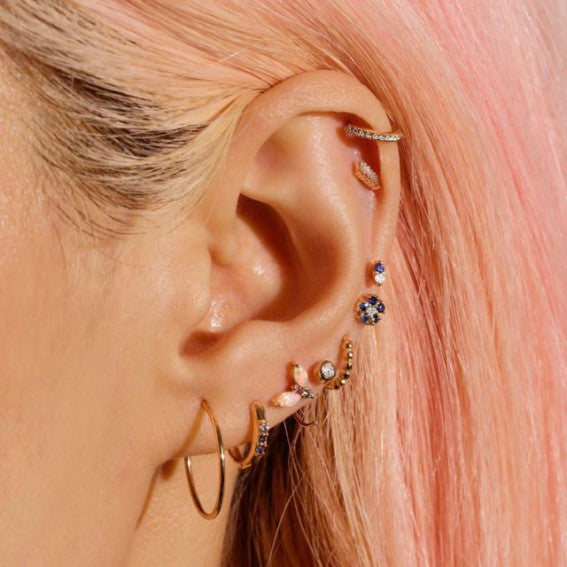
If you have several lobe piercings, treat them as the foundation of the stack. Place the largest piece in the first lobe, then reduce the scale as the jewellery moves up the ear. This creates a gentle gradient rather than a row of pieces competing for attention. For example, a polished 18k gold hoop in the first lobe can sit beautifully with a smaller textured huggie in the second and a petite star or crystal stud in the third.
Cartilage piercings are where a look becomes personal. A conch hoop can frame the centre of the ear, while a curved helix hoop follows its outer edge. If you wear both, keep one design simple. Pairing an ornate conch ring with a fine helix hoop feels considered; using two very detailed pieces can make the stack feel crowded, particularly on a smaller ear.
Nose jewellery deserves the same attention. A delicate gold nostril stud works well with a gold ear stack, but it does not need to match every single piece exactly. A small crystal, pearl-style detail or subtle black stone can act as a point of contrast while keeping the overall finish elevated.
Choose a metal palette before choosing designs
Matching jewellery is easier when you decide on your main metal first. Gold brings warmth and works especially well with celestial charms, pearls, rich-coloured stones and Western-inspired details. Sterling silver has a cooler, brighter feel and suits minimal pieces, polished balls, clear crystals and more graphic Gothic styling.
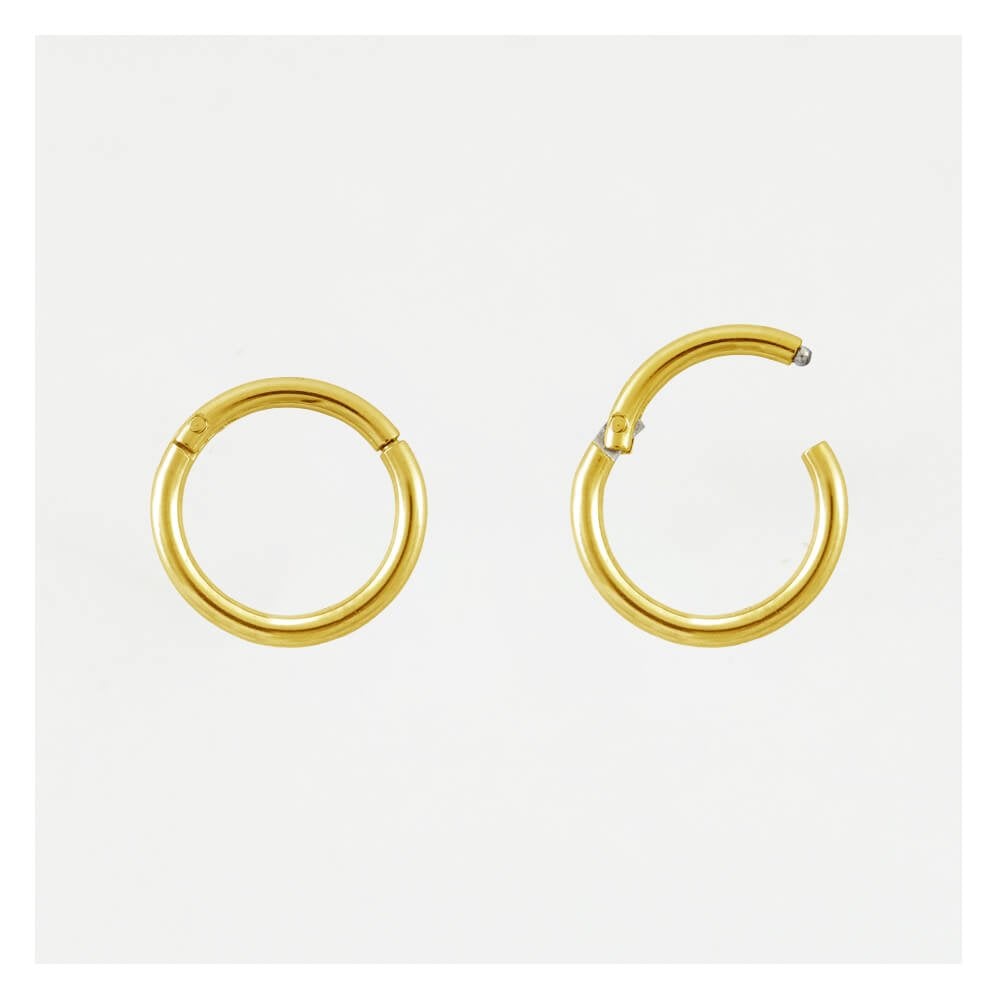
For a classic curated look, choose one dominant metal and repeat it across your most visible piercings. That might mean gold in your first and second lobes, then a gold helix hoop and matching nose stud. The repetition makes different shapes feel like part of the same collection.
Mixed metals can look just as stylish, but they need a little more purpose. Rather than wearing one random silver piece among five gold ones, repeat the second metal at least twice. A gold lobe stack with a silver conch hoop and silver tragus stud looks deliberate because the silver is echoed. You can also use a two-tone necklace or ring to tie the look together.
Material matters as much as colour. For healed piercings, premium sterling silver and quality gold designs offer a more polished alternative to disposable fashion jewellery. For new or irritated piercings, do not choose a piece simply because it matches your outfit. Speak to a professional piercer about suitable jewellery and wait until the piercing is fully healed before changing it for style.
Balance shapes, sparkle and detail
A well-matched stack usually has one focal point, a few supporting pieces and some breathing room. Your focal point may be a charm hoop, a larger gemmed stud, a belly bar with a striking stone or a distinctive nipple bar. Everything else should help that piece stand out rather than trying to steal its job.
If your statement piece has plenty of sparkle, bring in smooth metal nearby. A crystal conch hoop looks sharp beside plain huggies and a simple helix stud. If you prefer a more minimal base, use texture to add interest: a twisted hoop, beaded edge or tiny engraved motif catches the light without overwhelming the ear.
Motifs can link a look together too. Choose one story and repeat it lightly. A moon in one lobe, a tiny star in another and a clear crystal helix stud create a celestial feel without becoming costume-like. For a tougher edge, pair a polished silver hoop with a subtle spike or black stone rather than filling every piercing with skulls and chains.
The same principle works beyond the ear. A fine gold belly bar, small gold nose hoop and matching necklace can give a holiday outfit a cohesive finish. On a night out, a darker gemstone or Gothic charm can be your focal detail, with clean metal pieces keeping the look wearable.
Match the mood, not just the metal
Jewellery should work with how you dress, but it does not have to copy every colour in your wardrobe. A neutral, everyday stack gives you the most freedom. Fine hoops, small studs and clear stones are easy with knitwear, office looks, denim and occasionwear, so they earn their place as your regular pieces.
Then add personality through one or two changeable details. A pet-inspired charm can make a lovely gift or a playful weekend piece. Christmas jewellery can bring a little sparkle to party season without requiring you to rebuild your entire stack. Western-style stars, turquoise-toned stones and textured gold work especially well with denim, leather and relaxed summer outfits.
Consider proportion when matching jewellery to your outfit. If you are wearing a high neckline, scarf or statement earrings, lighter cartilage jewellery keeps the balance right. With an open neckline or simple black top, you can afford a more noticeable necklace and bolder first-lobe hoops. Your piercing jewellery is part of the whole look, not an afterthought.
Keep comfort at the centre of your styling
The best styling choice is one you can comfortably wear. Correct gauge, bar length and diameter affect both the appearance of your jewellery and how it sits in the piercing. A hoop that is too tight can look strained and may irritate the area; one that is too large can turn a neat stack into something that feels untidy. This is especially relevant for helix, conch, daith, tragus and nostril jewellery, where small size differences are very visible.
Do not assume that two pieces which look similar online will suit the same placement. A decorative lobe hoop may not have the proportions needed for a helix, and a flat-back stud designed for cartilage may be more comfortable than a traditional butterfly-backed earring in a snug position. Jewellery chosen with piercing knowledge behind it makes the process far less uncertain.
At London Loves Body Jewellery, the focus is on pieces selected with real piercing experience in mind, so style and suitability can sit together. Measure your existing jewellery if you are replacing a piece, and if you are unsure about fit, check with your piercer before ordering. It is a small step that prevents a beautiful design becoming an unworn one.
Build your stack over time
You do not need to fill every available piercing at once. In fact, the most expensive-looking curated ears often leave a little space. Start with two or three quality pieces that work together, wear them for a while, then notice what feels missing. You may want a slim hoop to soften a row of studs, or a tiny crystal to add light to an all-metal stack.
Photograph your ear in natural daylight before buying the next piece. It is surprisingly useful for seeing whether your current look needs more shine, a stronger shape or simply less going on. Save the heavily detailed designs for a single placement and let your everyday jewellery provide the framework.
The right match is the one that feels considered when you catch it in the mirror, comfortable when you forget you are wearing it, and unmistakably yours when you remember.