
Rook Piercing Jewellery That Looks Good and Fits Well
A rook sits in one of the most sculptural parts of the ear, so the wrong jewellery is hard to ignore. The right rook piercing jewellery follows the curve neatly, feels considered rather than bulky and brings character to your ear stack without competing with everything else you wear.
This is a placement where fit matters as much as finish. A beautifully detailed piece can still look awkward if its curve, length or gauge is not suited to your anatomy. Start with jewellery made for the rook, then choose a design that works with the rest of your ear rather than simply filling a space.
What jewellery works in a rook piercing?
The rook is the raised ridge of cartilage above the daith, tucked towards the front of the ear. Because it is curved and has limited room around it, a curved barbell is the classic choice. It is designed to sit through the piercing channel without putting unnecessary pressure on the cartilage.
A curved barbell has two threaded ends, often finished with small balls, sparkling stones, stars, hearts or more intricate decorative tops. It gives you a polished look while keeping the wearable part of the jewellery practical. For everyday styling, a slim curved barbell with a subtle stone or polished bead is hard to beat.
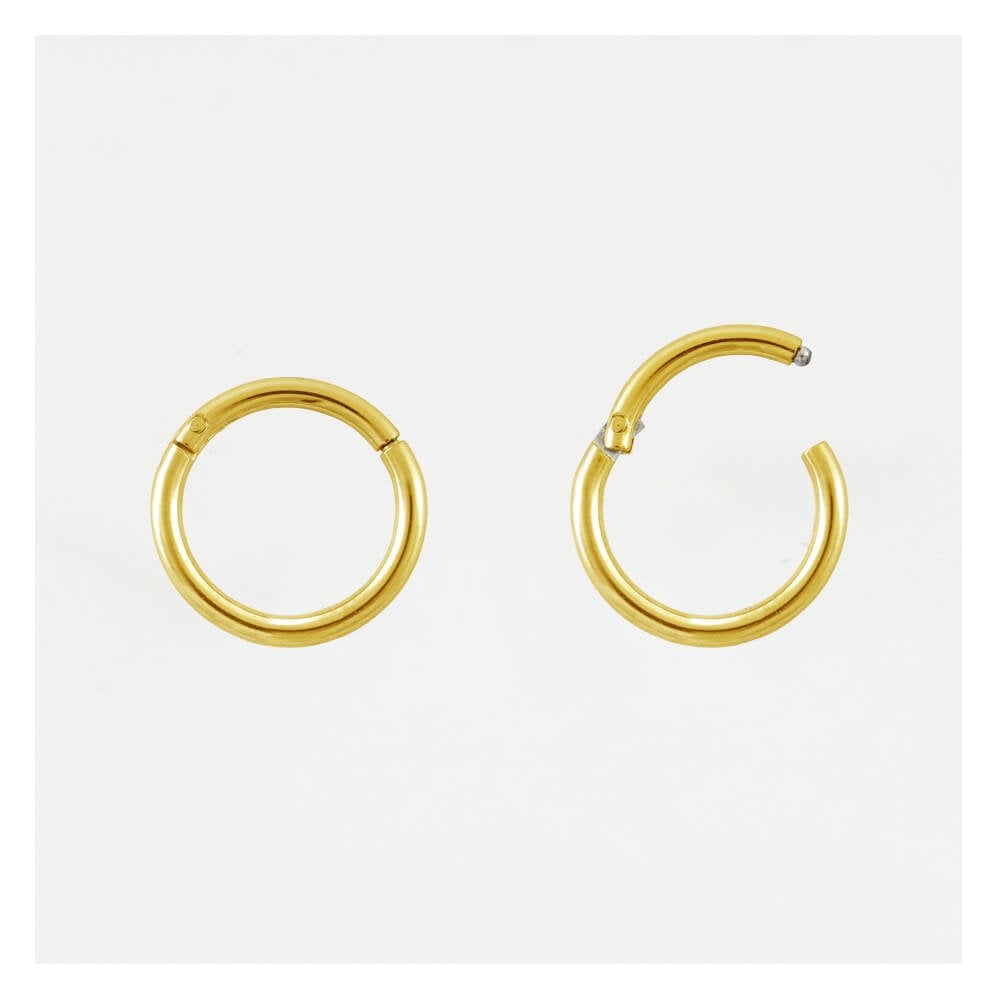
Once a rook is fully healed, some people can also wear a small ring or clicker. This creates a softer, more continuous line through the ear, particularly when paired with a daith ring or a collection of delicate lobe hoops. It does depend on your individual anatomy and the angle of the piercing. A ring that is too tight can press into the cartilage, while one that is too large may sit away from the ear and lose that clean, intentional finish.
For a fresh piercing, follow your piercer's advice and leave your initial jewellery in place. Changing cartilage jewellery too early can cause irritation and set healing back. A professional piercer can confirm when it is safe to switch to a new piece and advise on the size that will suit your healed piercing.
Rook piercing jewellery: size is the detail that changes everything
The most stylish rook jewellery still needs to fit properly. Cartilage varies from ear to ear, which is why a size that looks perfect on one person may feel uncomfortable or sit poorly on another.
The key measurements are gauge, bar length and, for rings, diameter. Gauge refers to the thickness of the post. Your piercer will normally use a standard gauge appropriate for the placement, and replacement jewellery should match it. Forcing in a thinner or thicker piece is never worth the risk of discomfort or damage to the piercing.
Length matters most with curved barbells. Initial jewellery is often a little longer to allow for swelling. Once healing is complete, downsizing to a shorter bar can make a real difference to comfort and appearance. It stops the ends from catching on hair, headphones or clothing, and helps the jewellery sit closer to the natural ridge of the ear.
With rings, diameter is the deciding factor. Choose a diameter that gives the cartilage breathing room without leaving a wide, floating gap. If you are unsure, measure the jewellery you already wear comfortably or ask a professional piercer for a fitting recommendation. Guessing can turn an exciting new piece into one that stays in the jewellery box.
The safest way to change a rook piece
Wash your hands thoroughly, work in good light and take your time. If a threaded end will not loosen easily, do not force it. Tight fittings are common, especially with small jewellery, and a piercer can change it quickly without putting pressure on the piercing.
It is also worth checking which way your jewellery threads. Most pieces use a standard screw fitting, but internally threaded and threadless designs are popular for their smooth finish and easy wear. Whatever style you choose, make sure the decorative end is secure before leaving the house. Few things are more frustrating than losing a favourite gemstone top on the train or during a busy day out.
Choose materials your cartilage will thank you for
A rook is not the place to compromise on materials. Cartilage piercings can be sensitive, particularly if they are newer or prone to irritation, so quality jewellery is an investment in both comfort and style.
Sterling silver has a bright, classic look and works beautifully for occasional wear in well-healed piercings. It is a favourite for creating a cool-toned ear stack, especially alongside silver hoops and crystal details. However, sterling silver is not usually the best choice for a fresh or irritated piercing, and it should not be worn continuously if your skin reacts to it or if the piece is showing signs of tarnish.
18k gold brings warmth and a more elevated finish. It is ideal when you want your rook to look like a deliberate part of a curated ear rather than an afterthought. Gold designs can be minimal and refined, or bring in texture through tiny leaves, celestial shapes and pavé-style sparkle. Always check whether a piece is solid gold, gold plated or gold vermeil, as this affects how it wears over time and how you should care for it.
Implant-grade titanium is another excellent option, particularly for sensitive skin and healing piercings. It is lightweight, durable and available in a range of finishes. Surgical steel is widely worn too, but sensitivities vary, so shoppers with a known nickel allergy may prefer titanium or a higher-quality gold option.
The best material is not just the one that looks good in a product photo. It is the one you can wear comfortably, confidently and often.
Styling a rook as part of a curated ear
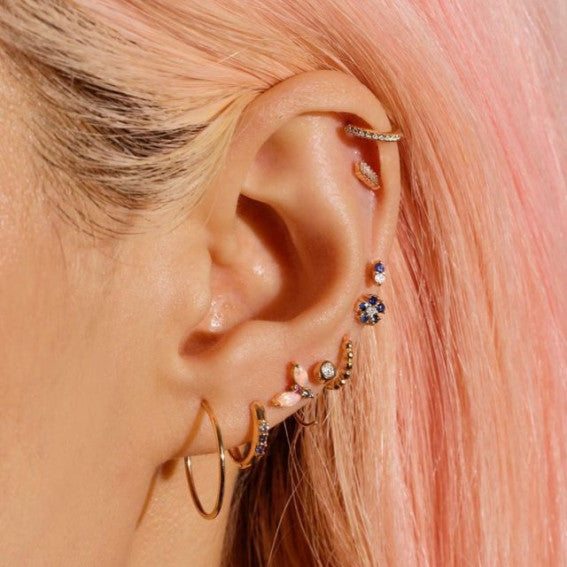
A rook naturally draws the eye upwards, making it a brilliant anchor for a layered ear look. The trick is to balance its detail with the jewellery around it. If your rook piece has a clear gemstone or an ornate top, keep nearby piercings more restrained. A tiny lobe stud, smooth huggie and fine helix hoop will let the rook stand out without making the overall look feel crowded.
For a softer, romantic style, choose warm gold tones with a small crystal, flower or heart detail. Pair it with a delicate conch hoop and a couple of understated lobe studs. If your taste leans more Gothic, a black stone, spike-inspired end or dark silver finish can give the rook more edge while still feeling wearable every day.
Mixing metals can work, but it should look intentional. Try making one metal dominant, then repeat the second metal in at least one other piercing. For example, a gold rook barbell can sit beautifully with silver lobe hoops if there is also a small gold stud in the helix. That repetition gives the mix a cohesive feel.
Your lifestyle matters too. If you sleep on that side, wear over-ear headphones or regularly tie your hair back, a low-profile curved barbell is usually more practical than a piece with large decorative ends. Statement jewellery has its place, but everyday comfort is what makes a look easy to maintain.
Keep your rook jewellery looking its best
Remove jewellery only when your piercing is healed and you are comfortable changing it. Clean well-healed pieces gently with warm water and mild soap, then dry them completely with a soft, lint-free cloth. Avoid harsh chemicals, perfume and lotions directly around the piercing, particularly with plated jewellery or stones.
Store pieces separately where possible. Small barbells and decorative ends are easy to scratch or misplace when loose in a jewellery dish. A compartmentalised box keeps matching components together and makes it far easier to rotate your ear stack when you want a different look.
If your rook becomes sore, swollen, hot or begins producing unusual discharge, do not simply change the jewellery and hope for the best. Seek advice from a reputable piercer or an appropriate healthcare professional. A good piece should feel like part of you, not something you have to put up with.
At London Loves Body Jewellery, we believe the best rook piece is one you notice for its style, not because it catches, presses or irritates. Choose a considered fit, a material that suits your skin and a design that feels unmistakably yours, then let that small curve of cartilage do exactly what it does best: add a little unexpected detail to your whole look.