
Threadless Stud Review: Are They Worth It?
A good stud should disappear into your day, not catch in your hair, loosen while you sleep or leave you second-guessing whether it will stay put. That is where this threadless stud review starts: with the practical difference a pin-fit fastening can make to the comfort, security and finish of your ear jewellery.
Threadless studs are a favourite for curated ears because they look clean from every angle and work across so many placements. From a tiny crystal in a tragus to a statement star in a conch, they offer a polished, low-profile alternative to conventional butterfly backs and threaded balls. The right piece feels elevated without being fussy - but fit, material and placement still matter.
What is a threadless stud?
A threadless stud has two parts: a decorative top with a smooth pin and a hollow labret post. Rather than screwing the top into the post, you insert the pin and create a very slight bend in it. That tension holds the top securely inside the post.
The result is a fastening with no visible screw thread and no bulky backing behind the ear. It is a simple system, but it is cleverly suited to body jewellery. The flat disc of a labret post sits comfortably against the skin, while the front can be as subtle or expressive as your style calls for.
This is not the same as a push-back earring. A quality threadless top is designed to fit a compatible threadless labret post, not a standard high-street earring post. The components need to be correctly sized and made to a reliable standard for the secure hold people expect.
Threadless stud review: the everyday advantages
The biggest reason to choose threadless jewellery is comfort. Traditional earring backs can press into the side of your head, catch on pillows and feel awkward in close-fitting placements. A flat-back labret is much neater, particularly for helix, tragus, forward helix, conch and lobe piercings.
There is also a real styling advantage. Threadless tops can be changed without replacing the whole post, provided the gauge and fit are compatible. Once you have correctly fitted posts in healed piercings, you can refresh your look with a new moon, flower, gem or Gothic-inspired design while keeping the same comfortable base in place.
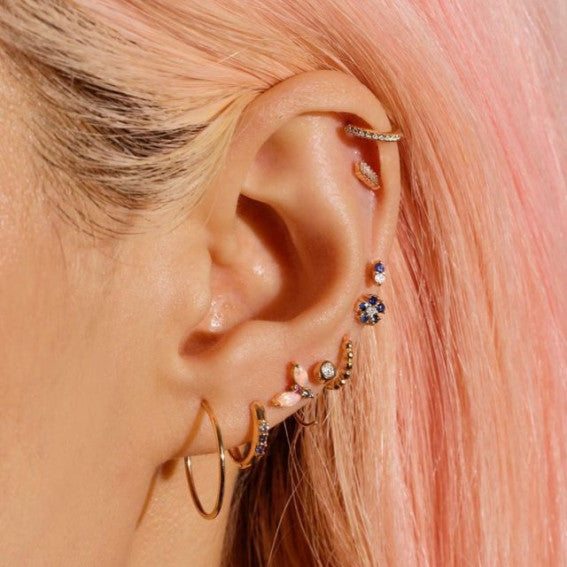
That makes them ideal for building a curated ear. You can combine delicate gold-toned shapes with stones, add a bolder centrepiece to a conch, or keep a lobe stack tonal and minimal. Because the fastening is hidden, the jewellery itself gets all the attention.
Security is another strength, with one important condition: the pin must be bent correctly. When fitted well, a threadless top should need a gentle but deliberate pull to release. If it slides out too easily, it needs a little more tension. If you bend the pin too sharply, it can become difficult to insert or may not sit as intended.
Where threadless studs work best
Threadless studs suit most ear placements that take a labret-style post. They are especially useful in areas where comfort and a tidy backing matter. A tragus or helix can feel much more wearable with a flat back than with a butterfly fastening, while a conch stud looks refined without excess hardware showing behind the ear.
They are equally effective in lobe piercings, especially if you sleep in your jewellery or wear several pieces together. Smaller designs can sit close to the ear for an understated everyday look, while larger decorative tops give you a focal point without the weight of a dangling earring.
Placement affects the post length you need. Fresh piercings are usually fitted with extra room to allow for swelling, whereas healed piercings often need a shorter post for a close, tidy fit. A post that is too long can snag, shift around and make a well-chosen stud look less polished. One that is too short can put pressure on the piercing and should not be forced into place.
For a new or irritated piercing, leave jewellery changes to a professional piercer. Even a beautiful stud is not worth disrupting the healing process.
Materials make the difference
A threadless fastening is only one part of the quality picture. The material touching your skin matters just as much, particularly if your ears are sensitive or you wear your jewellery day and night.
Sterling silver offers a bright, classic finish and is a lovely choice for healed lobe piercings where it can be removed for cleaning and cared for properly. It is not generally the first choice for a healing piercing or for constant wear in moisture-prone placements, as silver can tarnish and is not suitable for everyone.
For long-term body jewellery, implant-grade titanium and solid 14k or 18k gold are often stronger choices. They are valued for their skin-friendly properties and lasting finish. Gold-plated styles can be a great fashion option, but the durability depends on the quality and thickness of the plating, as well as how often the piece is worn, cleaned and exposed to products such as perfume or hairspray.
If you have reacted to jewellery before, do not rely on colour alone. “Gold” can describe a finish rather than a solid material, and cheap mixed metals can contain irritants. Look for clear material information and buy from specialists who understand piercing placements, not just trends.
The trade-offs to know before buying
Threadless studs are not completely fuss-free. Their modular nature is brilliant for styling, but it also means compatibility matters. A top from one maker may not fit every post from another, even when the pieces appear similar. Keeping compatible components together is the safest approach.
They can also take a little practice to fit. The pin needs a small curve, not a dramatic kink, and inserting it in a hard-to-reach area such as a tragus can be fiddly. If you are changing a piece at home, do it slowly with clean hands, good lighting and a mirror. If it is awkward, a piercer can fit it quickly and check that the length is right.
Very tiny tops have another obvious downside: they are easy to drop. Place a towel over the sink or work over a clear surface before changing jewellery. It is a small detail, but it can save a lot of searching.
Finally, threadless does not automatically mean better for every piercing. Some placements, jewellery styles and anatomy call for different fittings. The best choice depends on where the piercing is, whether it is healed, the thickness of the jewellery and how close you want the piece to sit.
How to choose a threadless stud that looks considered
Start with placement, then choose the design. A small, smooth top is usually the most comfortable choice for a tragus or forward helix, where large details can catch on hair or headphones. A conch has more room for a decorative disc, gem cluster or celestial shape. Lobes give you the freedom to mix textures, colours and sizes.
Next, check the gauge and post length. These are not details to guess at. A professional fitting gives you a reliable starting point, and measuring an existing well-fitting post can help when shopping for a new top. For healed piercings, the aim is a secure fit with enough room for normal movement, not a stud pressed tightly against the skin.
Then think about your wider jewellery wardrobe. A single polished gold stud can soften a silver stack, but matching metals creates a clean, intentional look. For a more expressive ear, pair a simple everyday base with one detail that reflects your personality: a tiny snake, a heart, a starburst or a dark Gothic motif.
At London Loves Body Jewellery, our selection is shaped by real piercing experience as well as style. That means choosing pieces that look special in a photo but also make sense in the placement you plan to wear every day.
Care that keeps the fastening secure
For healed piercings, clean the jewellery gently with warm water and mild soap where appropriate, then dry it carefully. Avoid coating the stud in lotions, hair products or perfume, as residue can dull stones and build up around the post. Check the connection occasionally by holding the flat back in place and giving the decorative top a gentle test pull.
If the top feels loose, remove it and add the smallest extra bend to the pin before reinserting it. Work gradually. Too much tension is harder to correct than too little. If the post feels stuck, the piercing is sore or there is swelling, stop and speak to a professional piercer rather than forcing the jewellery.
A threadless stud is at its best when it is properly fitted, made from a material that suits your skin and chosen with the placement in mind. Get those details right, and even the smallest piece can make your whole ear look more intentional.